Role of Light in Portrait Photography – Impactful Visual Storytelling
Role of Light in Portrait Photography – Impactful Visual Storytelling ! Woman adjusting scarf in window-lit living room scene Chasing Icelandic waterfalls or wandering across volcanic valleys, you might realize your most vivid memories are shaped by more than just breathtaking views.

Chasing Icelandic waterfalls or wandering across volcanic valleys, you might realize your most vivid memories are shaped by more than just breathtaking views. For portrait photography, light is not just about visibility—it is the key to sculpting emotion, atmosphere, and unforgettable stories against the raw beauty of Iceland. Whether you crave soft, romantic moments or bold, dramatic vibes, understanding the fundamental essence of light unlocks portraits as dynamic and unique as your adventures.
Table of Contents
- Defining Light’s Role In Portrait Photography
- Natural Versus Artificial Lighting Techniques
- How Light Shapes Mood And Expression
- Position, Quality, And Direction Of Light
- Common Lighting Pitfalls To Avoid
Key Takeaways
| Point | Details |
|---|---|
| The Importance of Light | Light is essential for creating emotional depth and storytelling in portrait photography. Understanding its characteristics can transform images from ordinary to impactful. |
| Natural vs. Artificial Lighting | Both natural and artificial lighting have unique benefits; photographers should master both to effectively convey their creative vision. |
| Lighting Techniques Impact Emotion | Different lighting styles evoke specific emotional tones, making it crucial to choose the appropriate technique for the desired effect. |
| Avoid Common Pitfalls | Understanding common lighting mistakes can enhance portrait quality; focus on correct light positioning to avoid unflattering results. |
Defining Light’s Role in Portrait Photography
Light is the magical ingredient that transforms photography from simple image capture to profound visual storytelling. In portrait photography, light does far more than simply illuminate a subject - it sculpts emotions, reveals character, and creates narrative depth. Fundamental photography principles demonstrate that mastering light is critical for creating compelling, meaningful portraits.
Understanding light’s complex role involves recognizing its multifaceted impact on photographic composition. Light influences several critical aspects of portrait photography:
- Mood and Emotion: Soft, diffused light can create intimate, gentle portraits
- Texture and Depth: Directional light reveals surface details and creates dimensionality
- Color Temperature: Different light sources produce unique color casts and atmospheric tones
- Subject Perception: Strategic lighting can flatter subjects or dramatize their features
Portrait photographers have several light manipulation techniques at their disposal. Directional lighting - whether from natural sunlight, studio strobes, or carefully positioned continuous lights - allows photographers to control how subjects are visually interpreted. By understanding light’s angle, intensity, and quality, photographers can create images that range from dramatically shadowed to softly illuminated.
Light is not just a technical element in photography, but a powerful storytelling tool that reveals the essence of human emotion and experience.
Pro tip: Practice observing how light changes throughout the day and experiment with different lighting angles to understand their unique visual impact on portraits.
Natural Versus Artificial Lighting Techniques
Photographers face a pivotal decision when choosing between natural and artificial lighting techniques for portrait photography. Portrait photography lighting involves understanding the unique characteristics and advantages of each lighting approach to create compelling visual narratives.
Natural lighting offers several distinctive benefits for portrait photographers:
- Soft, diffused illumination that mimics human perception
- Zero equipment cost and minimal setup requirements
- Authentic, organic appearance with subtle color variations
- Ideal for outdoor and lifestyle portrait scenarios
- Creates a sense of spontaneity and natural atmosphere
Artificial lighting, conversely, provides photographers with unprecedented control and precision. Studio strobes, continuous lights, and specialized photography lamps allow for meticulous manipulation of light characteristics. Photographers can precisely adjust:
- Light intensity and direction
- Color temperature and white balance
- Shadow and highlight details
- Background separation and subject definition
The choice between natural and artificial lighting is not about superiority, but about selecting the most appropriate technique for your specific creative vision and shooting environment.
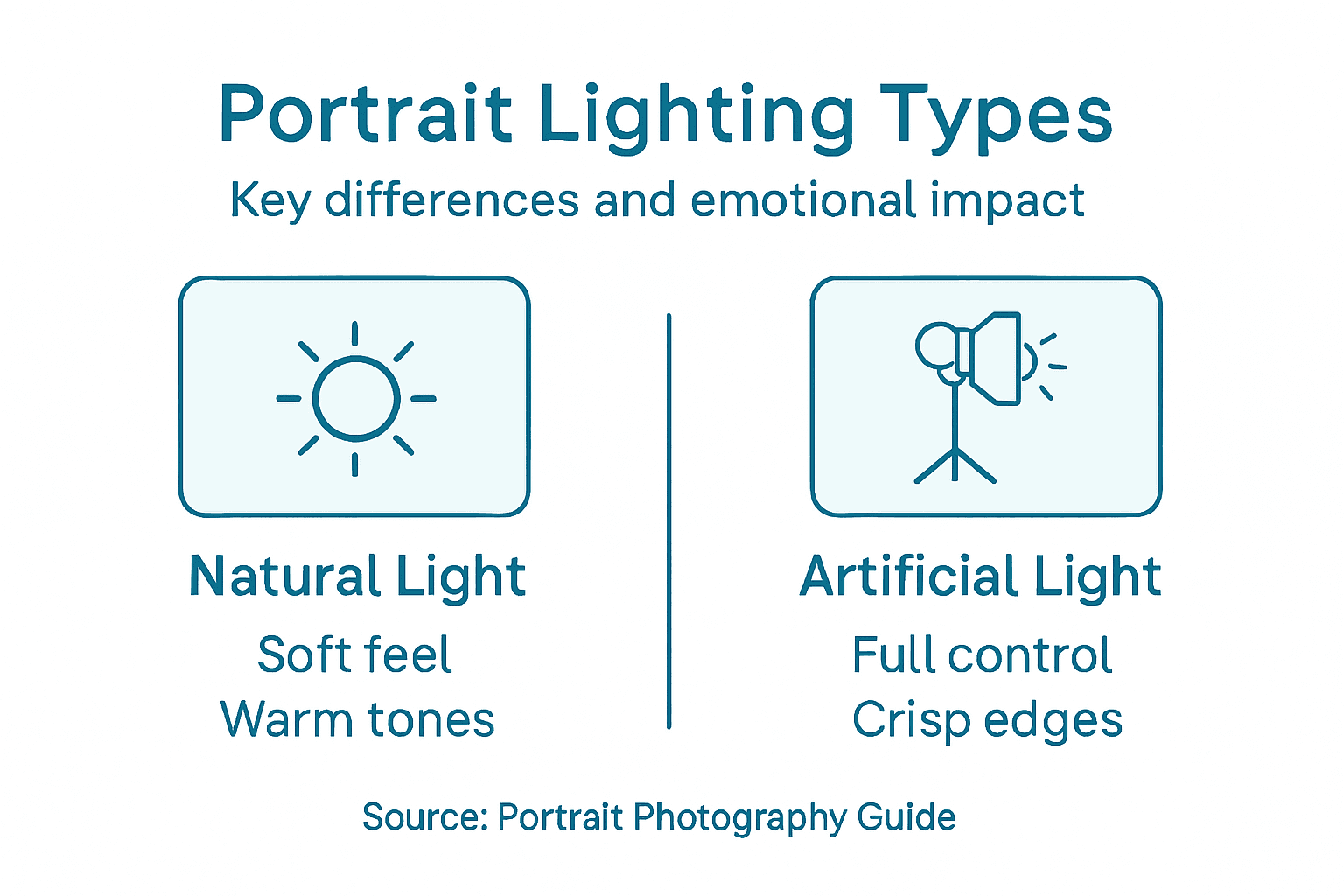
Mastering both lighting approaches requires understanding their unique strengths and limitations. While natural light provides organic beauty, artificial lighting offers technical precision. Professional photographers often blend these techniques, using natural light as a foundation and supplementing with strategic artificial light sources to enhance image quality.
Here’s a quick comparison of natural and artificial lighting for portrait photography:
| Aspect | Natural Lighting | Artificial Lighting |
|---|---|---|
| Setup Flexibility | Limited to time/weather | Full control, any location |
| Consistency | Variable, changes throughout day | Consistent, repeatable results |
| Cost | No added expense | Equipment can be costly |
| Creative Control | Less adjustable | Highly customizable |
Pro tip: Practice transitioning between natural and artificial lighting techniques by experimenting with hybrid lighting setups that combine ambient and controlled light sources.
How Light Shapes Mood and Expression
Light is the invisible brush that painters of photography use to craft emotional narratives. Portrait lighting techniques reveal how subtle shifts in illumination can transform a simple photograph into a profound emotional experience.
Different lighting styles dramatically influence emotional perception:
- Butterfly Light: Creates soft, glamorous portraits with gentle highlights
- Split Lighting: Adds dramatic tension by illuminating only half the face
- Rembrandt Lighting: Produces introspective, painterly effects with characteristic triangular highlight
- Loop Lighting: Generates approachable, balanced portraits with subtle facial dimensionality
Photographers strategically manipulate light to communicate complex emotional landscapes. Hard, directional light can suggest strength and intensity, while soft, diffused illumination implies vulnerability and gentleness. The interplay between light and shadow becomes a sophisticated language of visual storytelling.
Shadows are not absence of light, but the silent storytellers that reveal depth, emotion, and character in portrait photography.
Mastering emotional lighting requires understanding how different light qualities interact with facial features. Subtle shifts in angle, intensity, and color temperature can transform a subject’s perceived personality - making light an extraordinarily powerful narrative tool.
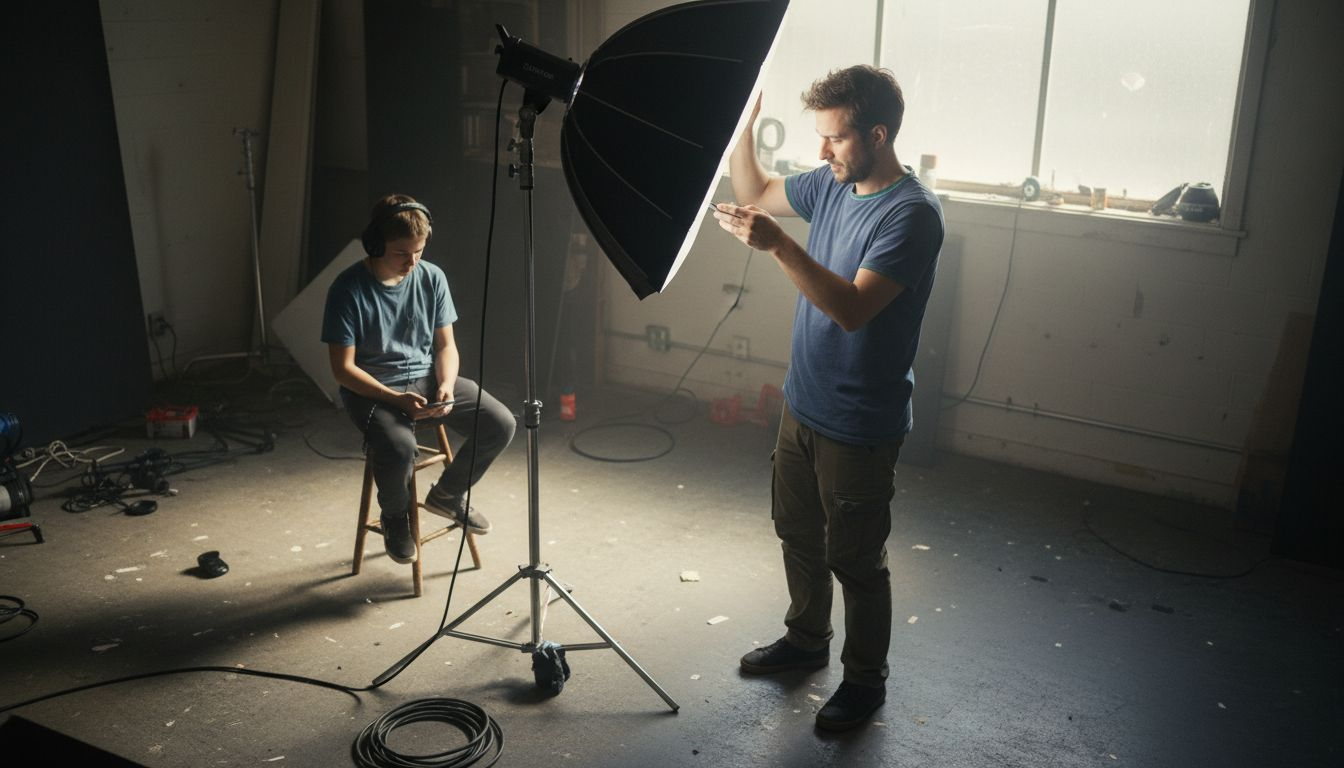
The table below summarizes how common lighting techniques shape the emotional tone of portraits:
| Lighting Style | Emotional Impact | Typical Use Case |
|---|---|---|
| Butterfly | Glamorous, uplifting | Beauty, fashion |
| Split | Dramatic, mysterious | Theatrical, character study |
| Rembrandt | Thoughtful, artistic | Fine art, moody settings |
| Loop | Natural, approachable | Everyday portraiture |
Pro tip: Experiment with moving your light source incrementally to observe how minute changes dramatically alter your subject’s emotional presentation.
Position, Quality, and Direction of Light
Portrait lighting fundamentals reveal light’s transformative power in creating compelling visual narratives. Understanding how photographers manipulate light’s position, quality, and direction becomes crucial for crafting images that transcend mere documentation.
Light position dramatically influences portrait characteristics through several key techniques:
- Front Lighting: Evenly illuminates the face, minimizing shadows and texture
- Side Lighting: Creates depth by emphasizing facial contours and shadows
- Butterfly Lighting: Produces symmetrical shadows directly under the nose
- Loop Lighting: Generates subtle nose shadows for dimensional rendering
- Rembrandt Lighting: Creates dramatic triangular highlight on cheek
Light quality determines the emotional resonance of a portrait. Hard light produces crisp, defined shadows with sharp edges, suggesting intensity and drama. Soft light creates gentle, diffused illumination that smooths skin textures and communicates vulnerability and approachability.
The photographer’s most powerful tool is not the camera, but the ability to sculpt light into an emotional language.
Directional lighting requires strategic positioning relative to the subject. Photographers must consider angle, distance, and light source characteristics to achieve desired emotional and visual effects. Subtle shifts can transform a portrait from flat documentation to a nuanced emotional narrative.
Pro tip: Practice creating multiple lighting setups with a single light source by incrementally changing its distance and angle to understand its transformative potential.
Common Lighting Pitfalls to Avoid
Portrait lighting mistakes can dramatically undermine the emotional impact and technical quality of photographic work. Understanding these common errors helps photographers create more compelling and professional images.
Critical lighting pitfalls that compromise portrait quality include:
- Incorrect Catchlight Placement: Creates lifeless, dull eye expressions
- Harsh Shadow Formation: Produces unflattering, distracting facial contours
- Improper Light Angle: Generates unflattering facial distortions
- Under-lighting: Causes flat, dimensionless portrait appearances
- Unbalanced Multiple Light Sources: Results in uneven, unprofessional lighting
Photographers must strategically manage light intensity and positioning. Key light placement just above eye level prevents unnatural shadows and ensures subjects appear approachable and well-illuminated. Understanding how different light angles interact with facial structure becomes crucial for creating dimensionally rich, emotionally resonant portraits.
Technical perfection in lighting is less about equipment and more about understanding how light sculpts human perception.
Additional considerations include managing light diffusion, understanding color temperature, and recognizing how different facial structures respond to varied lighting techniques. What works for one subject might create unflattering results for another, emphasizing the need for adaptive, nuanced lighting approaches.
Pro tip: Practice lighting techniques using a mannequin head to understand how light angles dramatically transform facial appearance without pressuring a live subject.
Unlock the Power of Light to Tell Your Own Story
Mastering light is the cornerstone of emotional portrait photography. As the article highlights, controlling light’s position, quality, and direction can shape mood, reveal character, and transform simple photos into unforgettable narratives. If you want to experience the magic of expertly crafted lighting that brings your unique story to life, then exploring Lucy MomentsPHOTOGRAPHER is your next step.

Discover how natural and artificial lighting techniques combine to capture the essence of human emotion against Iceland’s breathtaking landscapes. Whether you are a couple, traveler, or adventure seeker, Lucy transforms each moment into vivid, expressive portraits that reflect personal journeys. Don’t wait to create meaningful memories illuminated by skillful light artistry. Visit Lucy MomentsPHOTOGRAPHER now and book your session to turn your story into timeless visual poetry.
Frequently Asked Questions
What is the role of light in portrait photography?
Light is crucial in portrait photography as it sculpts emotions, reveals character, and creates narrative depth. The quality, direction, and angle of light can significantly affect the mood, texture, and perception of a subject.
How can I manipulate light to enhance my portraits?
You can manipulate light using techniques such as directional lighting, adjusting angles, and controlling intensity. Using natural light or artificial lighting allows you to flatter subjects and highlight their features effectively.
What are the differences between natural and artificial lighting for portrait photography?
Natural lighting offers soft, diffused illumination and an authentic appearance but is limited by time and weather. In contrast, artificial lighting provides full control over light characteristics, allowing you to manipulate intensity, direction, and color temperature for consistent results.
What are common mistakes to avoid in portrait lighting?
Common mistakes include improper catchlight placement, harsh shadow formation, and unbalanced multiple light sources. Understanding light placement and managing shadow effects ensures more flattering and professional-looking portraits.