Step-by-Step Guide to Capturing Iceland Memories
Step-by-Step Guide to Capturing Iceland Memories ! Traveler planning Iceland photo expedition Every adventurous couple and solo traveler knows the thrill of planning the perfect journey, but capturing the raw emotion and epic scale of Iceland takes thoughtful preparation.
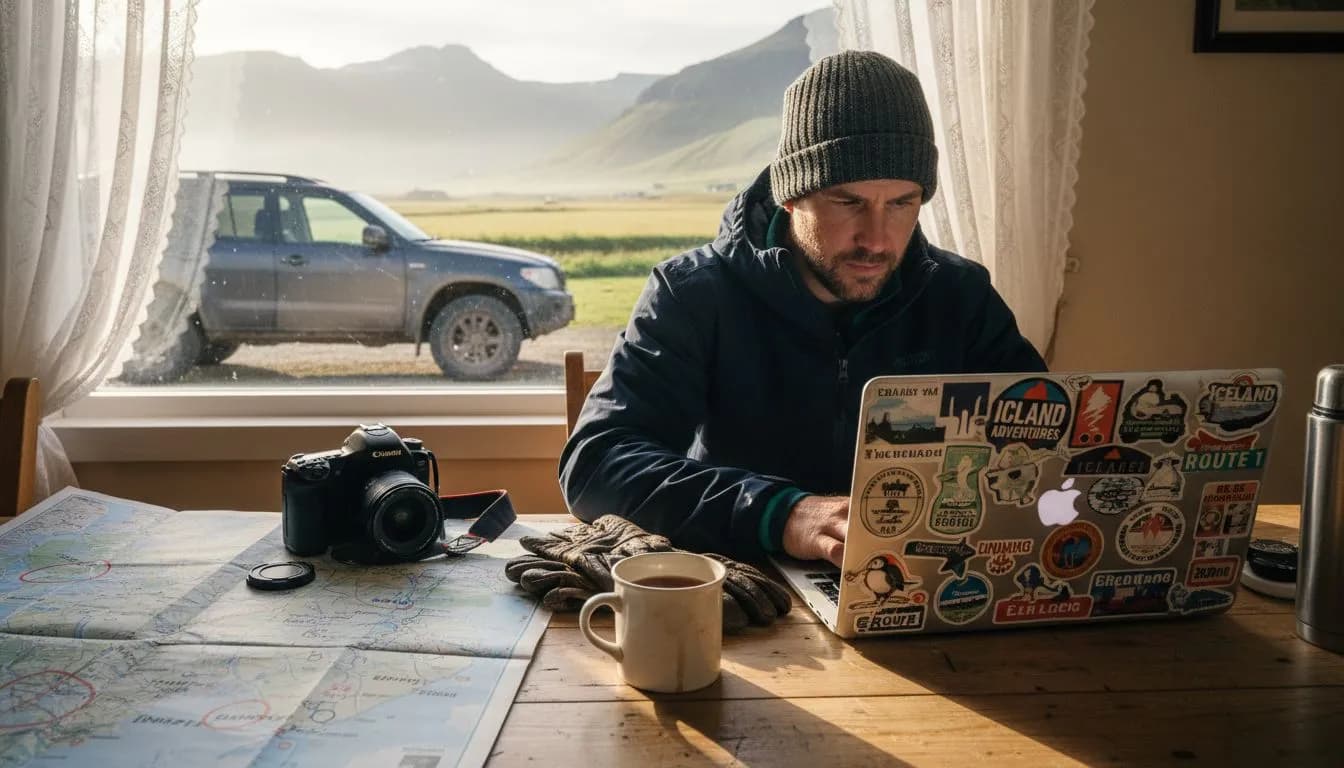
Every adventurous couple and solo traveler knows the thrill of planning the perfect journey, but capturing the raw emotion and epic scale of Iceland takes thoughtful preparation. Iceland’s powerful blend of black sand beaches, glaciers, and volcanic wonders demands more than just spontaneity if you want images that tell your true story. This guide sets the stage for an unforgettable photo adventure, helping you harness Iceland’s natural wonders and turn fleeting moments into lifelong memories.
Table of Contents
- Step 1: Plan The Ultimate Iceland Photo Adventure
- Step 2: Choose The Best Gear And Settings
- Step 3: Scout Iconic And Hidden Locations
- Step 4: Capture Emotional Storytelling Moments
- Step 5: Edit And Preserve Your Iceland Memories
Quick Summary
| Key Point | Explanation |
|---|---|
| 1. Research Photogenic Regions | Thoroughly investigate Iceland’s most captivating areas to optimize your photographic journey. This includes volcanic landscapes, glaciers, and coastal regions. |
| 2. Prepare for Weather Challenges | Equip yourself with weatherproof camera gear and understand local weather patterns to handle Iceland’s unpredictable climate effectively. |
| 3. Balance Iconic and Hidden Locations | Plan to photograph both well-known landmarks and lesser-known gems for a diverse and stunning portfolio. Use a mix of research and local insights. |
| 4. Master Emotional Storytelling | Focus on capturing moments that evoke emotions by documenting human interactions and personal connections with Iceland’s dramatic landscapes. |
| 5. Employ Subtle Editing Techniques | Use non-destructive editing to enhance your photos while preserving their authenticity and emotional storytelling quality. Maintain a consistent style that reflects Iceland’s atmosphere. |
Step 1: Plan the Ultimate Iceland Photo Adventure
Planning an extraordinary photography expedition in Iceland requires strategic preparation and insider knowledge. Your goal is crafting a personalized journey that captures the island’s breathtaking landscapes while maximizing photographic opportunities across its diverse terrains.
Starting your adventure demands thorough research into Iceland’s most photogenic regions. Smithsonian Journeys recommends exploring comprehensive routes that showcase volcanic landscapes, glacial formations, and geothermal areas. This approach ensures you’ll document Iceland’s extraordinary natural diversity.
Key planning elements include:
- Selecting optimal seasonal timing for photography
- Mapping potential shooting locations
- Understanding local weather patterns
- Identifying unique geological features
- Researching sunrise/sunset timings
Your photographic itinerary should balance structured planning with spontaneous exploration. Consider dividing your trip into distinct geographic segments, allowing deep immersion in each region’s unique visual characteristics. Coastal regions, volcanic zones, and glacier-adjacent areas offer dramatically different photographic backdrops.
Here’s a summary of how different Icelandic regions offer distinct photographic opportunities:
| Region Type | Signature Visuals | Unique Challenges | Recommended Approach |
|---|---|---|---|
| Coastal | Black sand beaches, cliffs | Rapid weather shifts | Flexible planning, weatherproof gear |
| Volcanic Zones | Lava fields, craters | Harsh terrain, rough paths | Research access, sturdy footwear |
| Glacier-Adjacent | Ice formations, blue glaciers | Cold, unpredictable light | Warm batteries, wide-angle lens |
Strategic preparation transforms a standard trip into an extraordinary visual narrative.
Professional photographers recommend packing versatile camera gear capable of handling Iceland’s unpredictable environmental conditions. This means weatherproof equipment, multiple lens types, and backup power solutions.
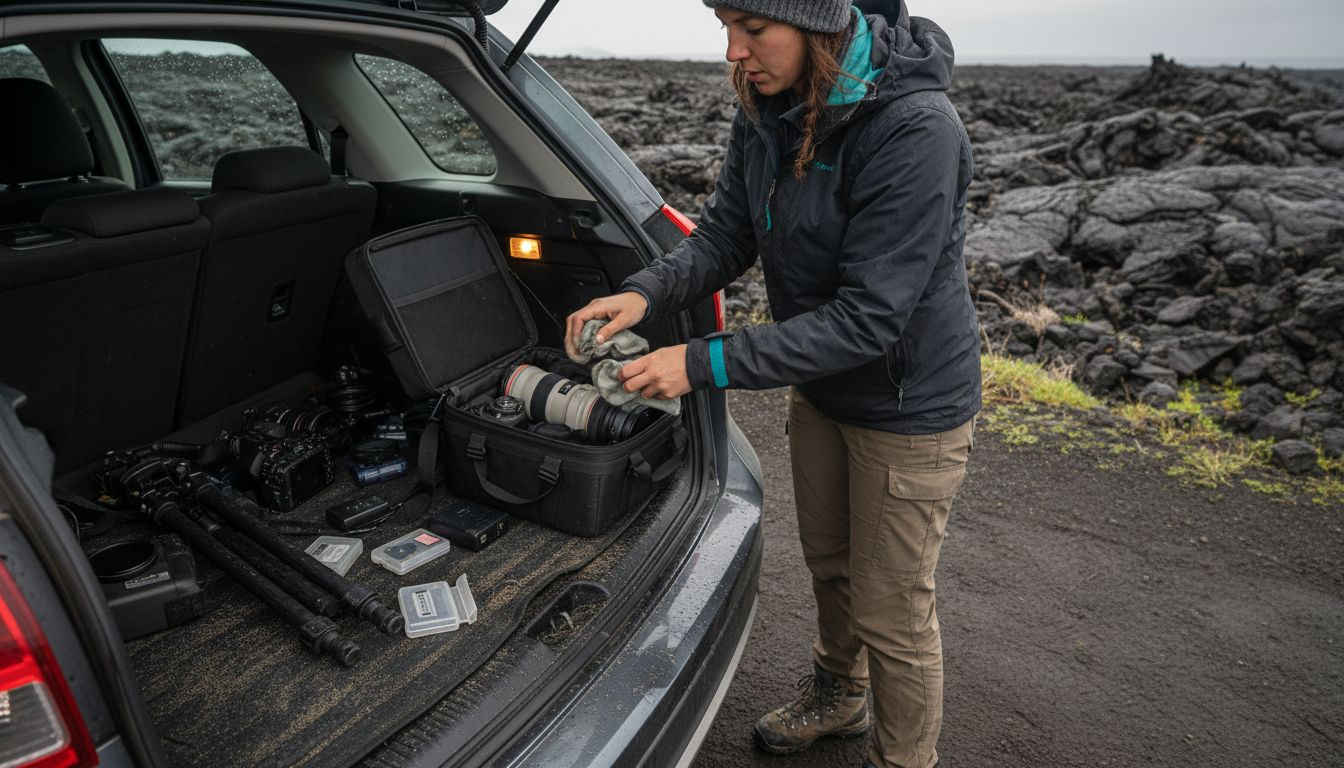
Pro tip: Always pack extra battery packs and memory cards, as Iceland’s remote locations make photography equipment resupply challenging.
Step 2: Choose the Best Gear and Settings
Capturing Iceland’s dramatic landscapes requires strategic camera equipment and technical expertise. Your goal is selecting gear that can withstand extreme conditions while delivering exceptional image quality across diverse photographic scenarios.
Understanding professional camera configurations becomes crucial when shooting in Iceland’s unpredictable environment. Wildlife photography techniques emphasize adapting settings quickly to changing light and movement, a skill particularly valuable in Iceland’s dynamic terrain.
Essential gear recommendations include:
- Weather-sealed professional camera body
- Wide-angle and telephoto lenses
- Sturdy tripod with quick-release head
- Extra batteries and memory cards
- Lens cleaning kit
- Protective camera rain cover
Your camera settings must accommodate Iceland’s unique lighting conditions. Aperture priority mode works exceptionally well for landscape photography, allowing flexibility in depth of field and exposure. Lighting fundamentals suggest maintaining versatile settings that can capture both broad scenic views and intricate natural details.
Mastering your camera’s capabilities is the difference between documenting and creating art.
Consider packing multiple lenses to handle Iceland’s diverse photographic opportunities. A wide-angle lens captures expansive landscapes, while a telephoto lens enables detailed shots of distant geological formations and wildlife.
Pro tip: Invest in extra battery power banks and keep them warm, as cold temperatures dramatically reduce battery performance in Iceland’s harsh environment.
Step 3: Scout Iconic and Hidden Locations
Discovering Iceland’s most photogenic landscapes requires a strategic approach that balances famous landmarks with secret, lesser-known spots. Your mission is crafting a photography journey that captures both the legendary and the unexplored visual treasures of this remarkable island.
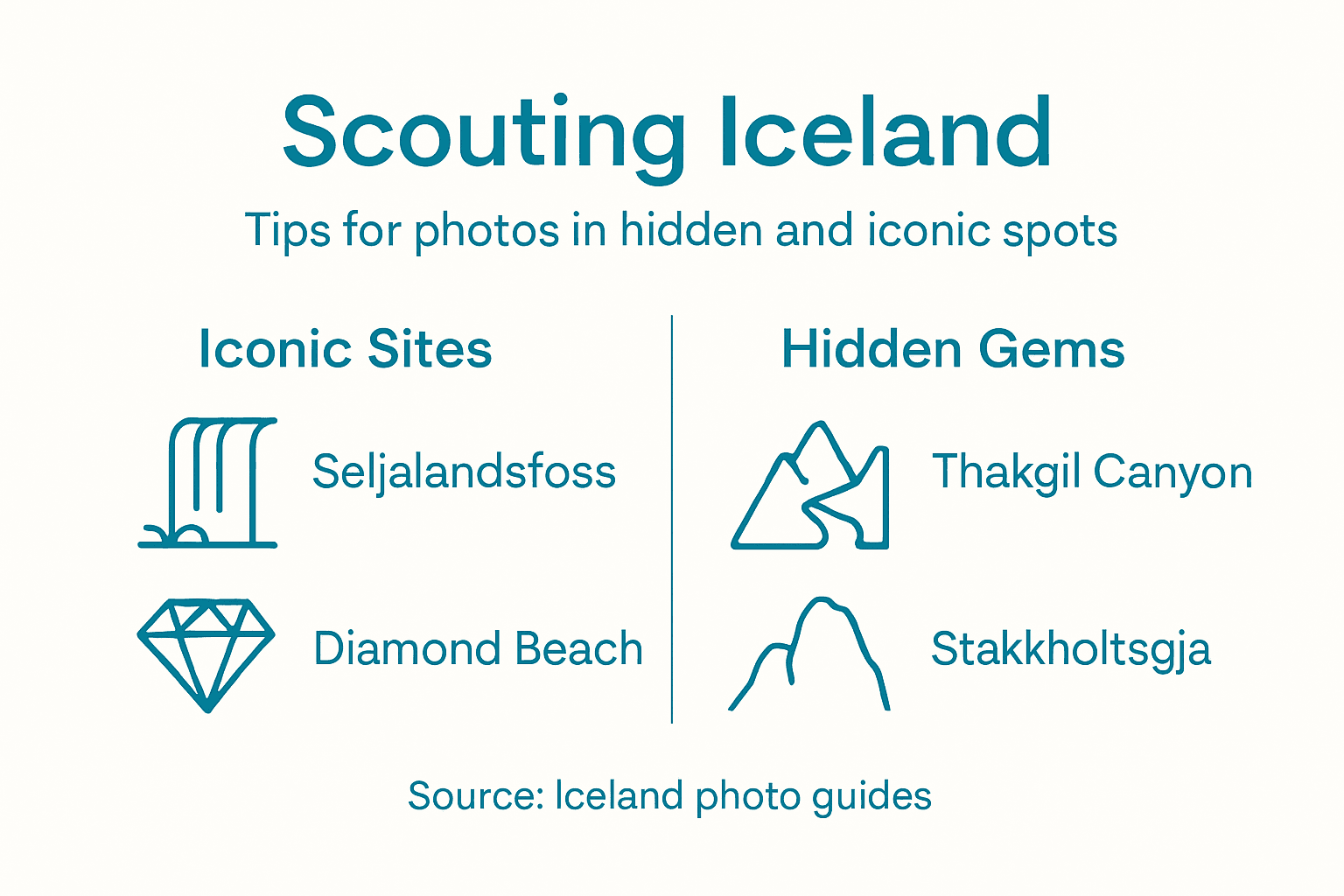
Golden Circle destinations offer photographers classic Icelandic scenery, including Þingvellir National Park, Gullfoss Waterfall, and the Haukadalur Geothermal Area. These iconic locations provide guaranteed stunning backdrops for your photographic expedition.
Location scouting strategies include:
- Researching geographic diversity
- Studying topographic maps
- Consulting local photography communities
- Checking sunrise/sunset positioning
- Understanding seasonal accessibility
- Identifying potential composition angles
Beyond mainstream locations, hidden photographic gems await exploration. Vatnajökull National Park reveals extraordinary sites like remote ice caves and intricate volcanic landscapes that most tourists never witness. These off-the-beaten-path locations offer unique visual narratives for adventurous photographers.
True photographic magic happens when curiosity meets preparation.
Your location research should blend online resources, local recommendations, and personal exploration. Topographic maps and satellite imagery can reveal unexpected landscape features that transform ordinary scenes into extraordinary compositions.
Pro tip: Download offline mapping applications and save GPS coordinates for your selected locations, as cellular coverage can be extremely limited in Iceland’s remote regions.
Step 4: Capture Emotional Storytelling Moments
Transforming your Iceland photography from mere documentation to powerful narrative requires understanding how visual storytelling communicates deeper emotional experiences. Your mission is creating images that reveal the profound connection between landscape and human experience.
Storytelling through photography goes beyond technical perfection, focusing on capturing moments that evoke genuine emotional resonance. National Geographic’s insights emphasize the importance of context, emotion, and narrative in creating compelling visual stories.
Storytelling photography techniques include:
- Capturing human interactions with landscape
- Documenting subtle emotional expressions
- Creating visual sequences that suggest progression
- Highlighting environmental contrasts
- Revealing personal connections to place
- Exploring human vulnerability in dramatic settings
Your photographic approach should integrate emotional composition techniques that transform Iceland’s landscapes into living narratives. Narrative photography principles suggest using strategic lighting, thoughtful framing, and intentional subject placement to invite viewers into your visual story.
Authentic storytelling happens when vulnerability meets landscape.
Consider photographing travelers experiencing Iceland’s raw environments. Candid moment capture reveals profound human emotions against the island’s dramatic backdrops, creating images that transcend traditional landscape photography.
Pro tip: Wait and observe before shooting, allowing genuine moments of connection to unfold naturally between subjects and their extraordinary surroundings.
Step 5: Edit and Preserve Your Iceland Memories
Transforming your raw Iceland photographs into timeless visual stories requires thoughtful editing and preservation techniques that honor the emotional landscape you’ve captured. Your goal is creating images that not only document your journey but also preserve the profound sensory experience of your Icelandic adventure.
Ethical nature photography principles emphasize maintaining the authentic essence of your images while enhancing their storytelling potential. This means editing with a light touch that amplifies the natural beauty without distorting the original scene.
Photo editing and preservation strategies include:
- Using non-destructive editing techniques
- Maintaining original image files
- Creating multiple backup systems
- Calibrating color and exposure subtly
- Preserving dynamic range
- Selecting images that tell a cohesive story
- Archiving with consistent metadata
Your editing workflow should focus on subtle visual enhancements that elevate your narrative. Digital post-production techniques from professional photography courses suggest using tools like Adobe Lightroom to make precise adjustments that highlight Iceland’s unique atmospheric qualities.
Compare common Iceland photography editing strategies and their effectiveness:
| Editing Strategy | Preserves Authenticity | Enhances Storytelling | Best Used For |
|---|---|---|---|
| Non-destructive Edits | Yes | Moderate | Maintaining original quality |
| Subtle Color Grading | Yes | High | Creating consistent mood |
| Visual Sequencing | Yes | Very High | Building emotional narratives |
Every edit should serve the story, not overshadow the experience.
Consider creating visual narrative collections that sequence your images to communicate the emotional progression of your Iceland journey. This approach transforms individual photographs into a compelling visual memoir.
Pro tip: Develop a consistent editing style that reflects the mood and atmosphere of Iceland, using preset color grading that captures the island’s ethereal light and dramatic landscapes.
Capture Your Own Iceland Story with Professional Guidance
Planning and executing a photography journey in Iceland brings challenges like mastering unpredictable weather, scouting hidden gems, and telling emotional visual stories. If you seek to transform these challenges into unforgettable memories, personalized expertise is key. Lucy MomentsPhotography specializes in creating high-quality, emotionally expressive images that reflect your unique Icelandic adventure and personal narrative. From selecting the perfect locations to capturing authentic moments in rugged landscapes, every step aligns with the detailed approach outlined in the article.

Elevate your Iceland photography experience by collaborating with a professional who understands the importance of storytelling and technical prowess. Visit Lucy MomentsPhotography to explore the portfolio, learn about tailored services, and book your session. Begin your journey now and preserve your Iceland memories as timeless visual stories that truly resonate.
Frequently Asked Questions
How should I plan my photography itinerary for Iceland?
To plan your photography itinerary effectively, research Iceland’s most photogenic regions and map out potential shooting locations. Consider dividing your trip into geographic segments to immerse yourself in each area’s unique characteristics, like coastal or volcanic zones.
What camera gear is essential for capturing landscapes in Iceland?
Essential camera gear includes a weather-sealed camera body, a wide-angle lens for sweeping landscapes, and a sturdy tripod. Make sure to pack extra batteries and memory cards, as cold weather can drain battery life quickly.
How can I find both iconic and hidden photography locations in Iceland?
You can find both types of locations by researching well-known landmarks and consulting local photography communities for hidden gems. Utilize topographic maps and satellite imagery to uncover unique landscapes not commonly visited by tourists.
What techniques can I use to create emotional storytelling in my images?
To create emotional storytelling, focus on capturing human interactions with landscapes and documenting subtle emotional expressions. Consider using strategic lighting and thoughtful framing to invite viewers into your visual narrative.
What should I do during the photo editing process to maintain authenticity?
During the editing process, use non-destructive techniques to preserve the original essence of your images while enhancing their appeal. Maintain original image files and create backups, while using subtle color grading to build a cohesive visual mood.
How can I organize my photos to tell a cohesive story after my trip?
Organize your photos by selecting images that create a visual sequence reflecting your journey’s emotional progression. Develop a consistent editing style that captures the mood of your Iceland experience, helping to create a compelling visual memoir.