Natural Light in Icelandic Photography – Why It Matters
Natural Light in Icelandic Photography – Why It Matters ! Photographer with tripod in evening Icelandic light Every serious adventure photographer dreams of capturing those rare moments when Iceland's natural light turns an ordinary scene into a powerful visual narrative.
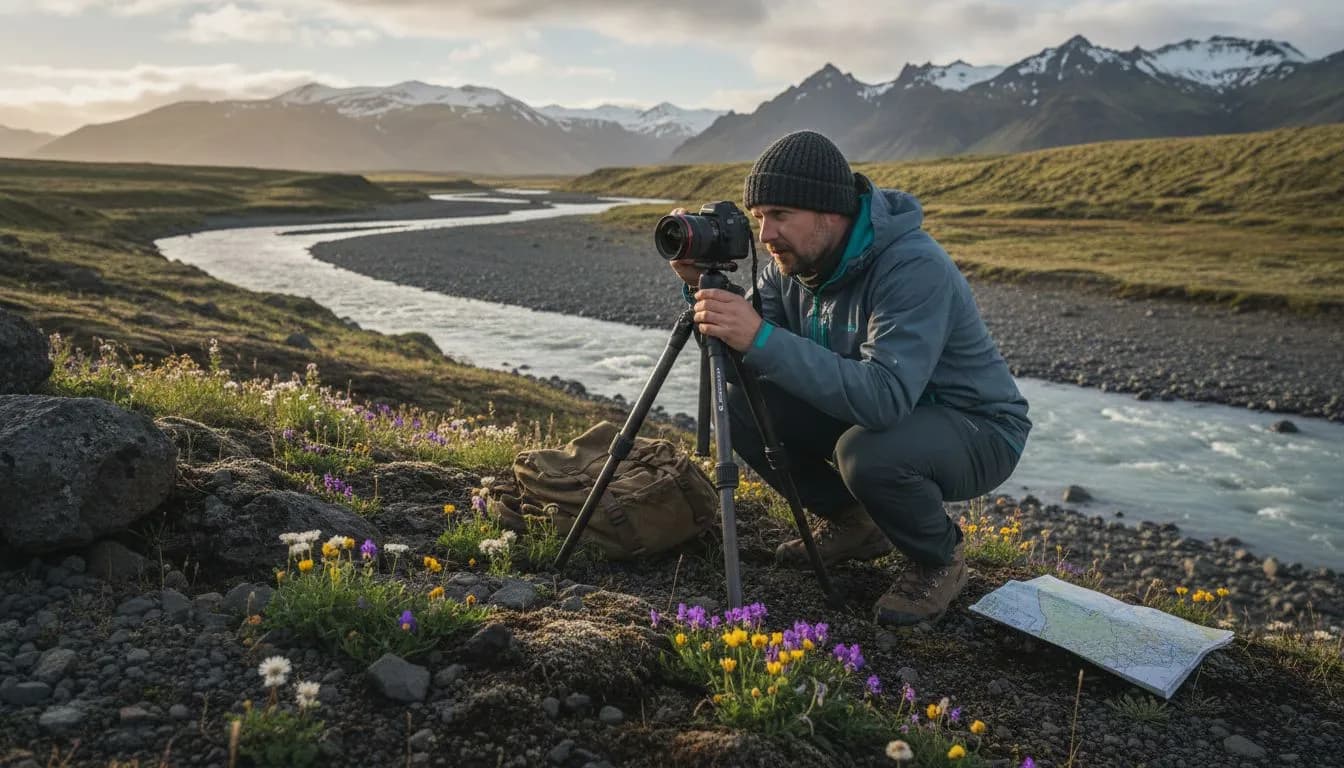
Every serious adventure photographer dreams of capturing those rare moments when Iceland’s natural light turns an ordinary scene into a powerful visual narrative. The wild, ever-changing conditions across Icelandic landscapes create both stunning backdrops and unique technical challenges. In this guide, you will discover how to harness the magic of extended golden hours, dramatic low-angle sunlight, and rapid light shifts to create authentic, emotionally charged stories through your lens, making every journey across Iceland unforgettable.
Table of Contents
- Natural Light In Icelandic Photography
- Key Light Phenomena In Iceland’s Landscapes
- Seasonal Variations And The Midnight Sun
- Emotional Impact And Storytelling Through Light
- Practical Tips For Working With Natural Light
- Common Challenges And Mistakes To Avoid
Key Takeaways
| Point | Details |
|---|---|
| Natural Light as a Narrative Tool | Icelandic photographers use natural light not just for exposure, but as a medium to convey emotional stories through landscapes. |
| Unique Geographical Impact | The unique geography of Iceland creates extraordinary lighting conditions, including extended golden hours and rapid light transitions, fostering dynamic imagery. |
| Challenge of Light Variations | Photographers must adapt to Iceland’s extreme light variations, especially during seasonal changes like the Midnight Sun and winter shadows. |
| Importance of Preparation | Adequate preparation, including the use of filters and tripods, is crucial to effectively manage unpredictable weather and lighting scenarios in Iceland. |
Natural Light in Icelandic Photography
Icelandic photography represents a profound artistic journey where natural light becomes more than just an illumination technique - it transforms into a narrative medium. Contemporary photographers in Iceland have revolutionized visual storytelling by using light as a critical emotional conduit, communicating subjective landscape experiences.
The unique geographical positioning of Iceland creates extraordinary photographic conditions that distinguish its visual language. Natural light in this Nordic landscape behaves differently compared to other regions, offering photographers remarkable opportunities:
- Extended golden hour periods during summer solstice
- Dramatic low-angle sunlight creating intense shadows and textures
- Rapid light transitions that produce extraordinary atmospheric conditions
- Soft, diffused illumination from cloud formations
Landscape Interaction becomes central to understanding Icelandic photographic aesthetics. Photographers do not merely capture scenes; they interpret the intricate dialogue between light, terrain, and emotional resonance. The interaction between natural landscapes and light reveals profound storytelling potential.
Professional photographers understand that Icelandic light is not just about technical exposure - it’s about capturing ephemeral moments that communicate deeper emotional truths. The interplay of light across volcanic landscapes, glacial terrains, and coastal environments creates a visual poetry that transcends traditional photographic boundaries.
Pro Tip: Always carry neutral density filters and a tripod to maximize Iceland’s unpredictable yet magnificent natural lighting conditions.
Key Light Phenomena in Iceland’s Landscapes
Iceland’s extraordinary landscapes offer photographers a dynamic canvas where light becomes an essential storytelling element. Unique geographic conditions create extraordinary visual phenomena that transform ordinary scenes into extraordinary photographic opportunities.
The most remarkable light phenomena in Iceland emerge from its distinctive geographical characteristics:
- Northern Lights (Aurora Borealis) dancing across dark winter skies
- Extended golden hour periods during summer solstice
- Dramatic low-angle sunlight creating intense landscape shadows
- Rapid light transitions producing extraordinary atmospheric conditions
- Soft, diffused illumination from complex cloud formations
Volcanic Landscapes dramatically influence light interactions, creating unique visual experiences. The interplay between sunlight, glacial surfaces, and volcanic terrain produces extraordinary contrast and texture. Dramatic natural features like waterfalls, lava fields, and glaciers become living canvases where light sculpts visual narratives.
Photographers drawn to Iceland understand that light here is not merely an illumination source - it’s a dynamic, transformative force. The high latitude creates prolonged twilight periods, allowing extended shooting windows that capture nuanced emotional landscapes. Stark contrasts between light and shadow reveal intricate details in terrain, turning each photograph into a profound visual story.
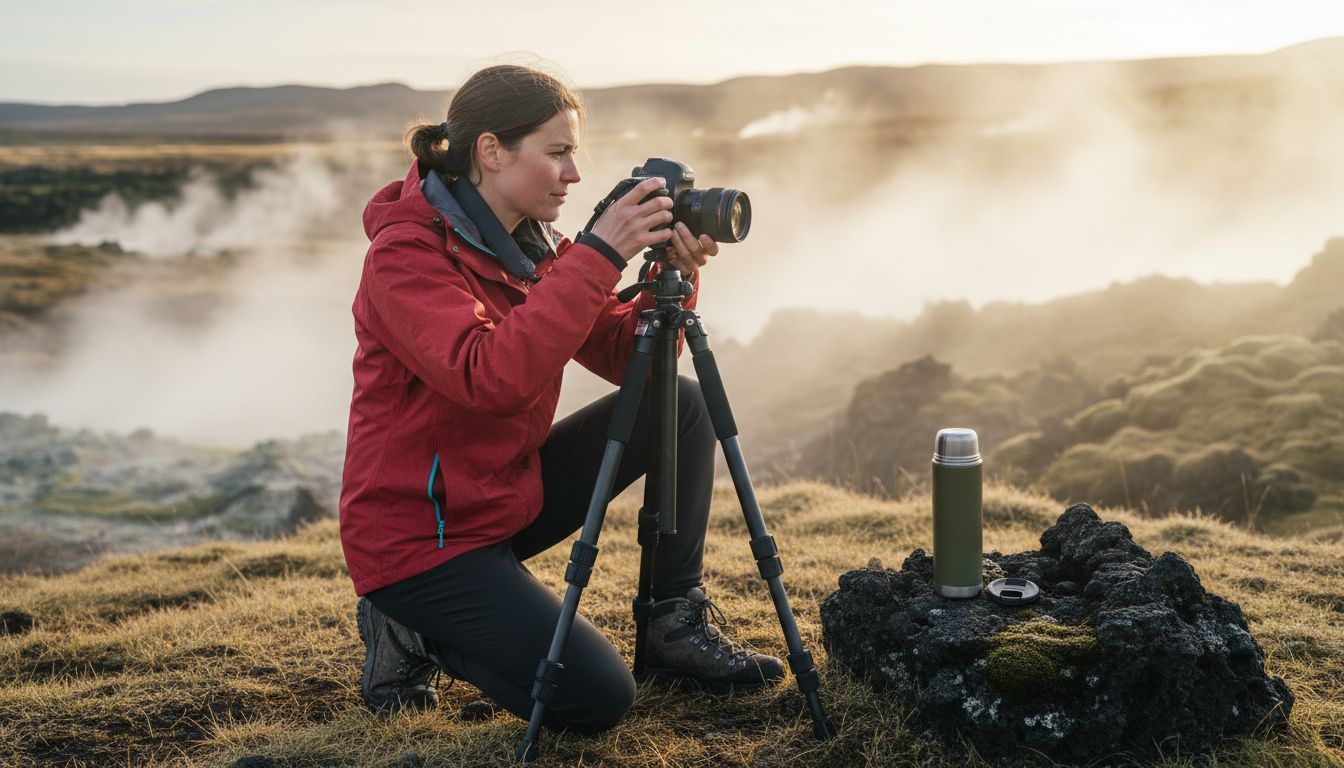
Pro Tip: Pack multiple graduated neutral density filters to manage Iceland’s extreme light variations and capture the full dynamic range of its breathtaking landscapes.
Seasonal Variations and the Midnight Sun
Iceland’s extraordinary latitude creates a photographic playground where light behaves in ways that challenge traditional understanding. Extreme light cycle variations transform the landscape into a dynamic canvas for photographers seeking unique visual narratives.
The seasonal light variations in Iceland present photographers with remarkable opportunities:
- Summer Midnight Sun periods with 24-hour daylight
- Prolonged golden hour lasting several hours
- Winter’s short days creating moody, dramatic lighting
- Twilight zones that blur traditional day-night boundaries
- Soft, diffused light during transitional seasons
Photographic Strategies must adapt to these dramatic light shifts. Summer months offer unprecedented shooting windows where golden hour can extend for hours, allowing photographers to capture landscapes bathed in warm, ethereal light. Conversely, winter presents a more challenging yet equally captivating environment with muted, soft illumination that emphasizes texture and subtle color variations.
The psychological and technical implications of these light cycles are profound. Photographers must recalibrate their understanding of exposure, composition, and timing. During the Midnight Sun, the constant daylight requires specialized techniques to manage highlights and create depth in images that would typically be impossible during traditional lighting conditions.
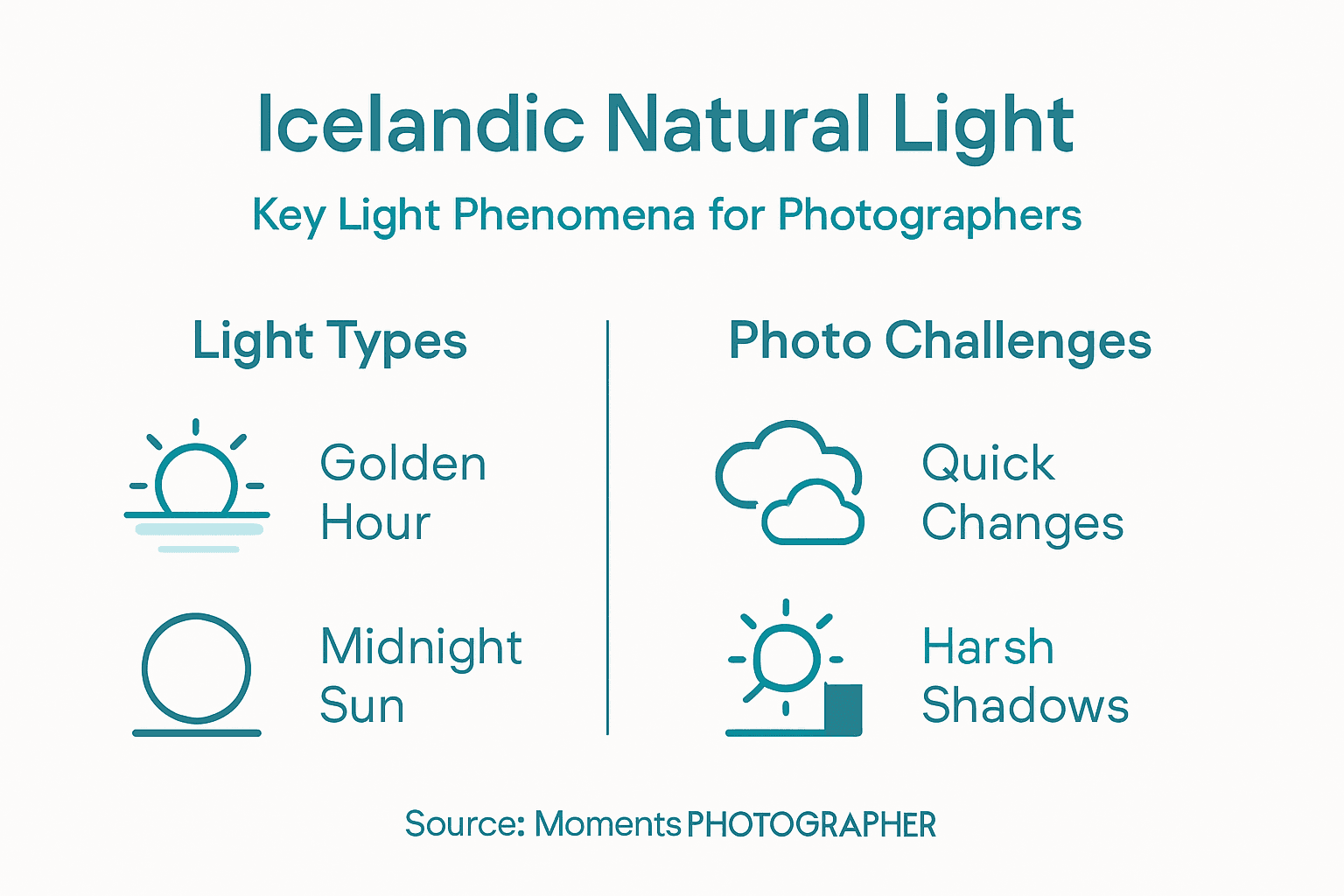
Here’s a quick reference to how Iceland’s natural light phenomena impact landscape photography:
| Phenomenon | Visual Effect | Photographic Opportunity |
|---|---|---|
| Extended golden hour | Warm, low-angle light | Soft shadows and rich colors |
| Midnight sun | Continuous daylight | Endless creative shooting time |
| Northern lights | Vibrant skies at night | Iconic long-exposure shots |
| Dramatic shadow play | Deep contrasts | Emphasizes landscape textures |
| Rapid light shifts | Changing ambiance | Captures mood transitions |
Pro Tip: Bring multiple neutral density filters and a tripod with adjustable head to maximize the unique lighting conditions across Iceland’s diverse seasonal landscapes.
Compare how different seasons influence Icelandic photography:
| Season | Light Characteristics | Creative Challenges | Shooting Tips |
|---|---|---|---|
| Summer | Prolonged daylight, gentle tones | Managing high highlights | Use ND filters, plan for long sessions |
| Winter | Short daylight, blue tones | Limited shooting window | Adjust ISO, focus on mood |
| Spring/Fall | Soft, diffused light | Weather variability | Scout locations ahead, adapt settings |
Emotional Impact and Storytelling through Light
In Iceland’s photographic landscape, light transcends mere technical illumination and becomes a profound storytelling medium. Natural light’s emotional power transforms ordinary scenes into visual narratives that resonate deeply with viewers’ inner emotional landscapes.
Photographers capture emotional nuances through strategic light manipulation:
- Soft morning light revealing vulnerability
- Dramatic shadows creating tension and mystery
- Golden hour hues expressing warmth and nostalgia
- Diffused twilight suggesting contemplation
- Harsh midday light emphasizing stark emotional landscapes
Narrative Techniques emerge when photographers understand light as a language. Storytelling through natural illumination allows visual poets to guide viewer perception, creating intimate connections between image and emotion. The subtle shifts in light quality become metaphors for human experiences - hope, melancholy, resilience, and transformation.
Icelandic landscapes provide an unparalleled canvas for emotional storytelling. The interplay of light across volcanic terrains, glacial expanses, and coastal environments creates visual poems that communicate beyond words. Photographers become translators, converting atmospheric conditions into emotional experiences that transcend traditional visual representation.
Pro Tip: Practice observing light’s emotional qualities before pressing the shutter - understand how different angles and intensities communicate distinct feelings.
Practical Tips for Working with Natural Light
Icelandic photography demands a nuanced understanding of natural light, transforming technical knowledge into artistic expression. Landscape photographers must master light variations to capture the country’s extraordinary visual narratives.
Most effective strategies for working with natural light include:
- Plan shoots around golden hour and blue hour
- Utilize tripods for stability during low-light conditions
- Experiment with graduated neutral density filters
- Understand how weather impacts light quality
- Adapt camera settings to changing illumination
Camera Techniques play a crucial role in managing Iceland’s dynamic lighting conditions. Natural light photography requires strategic approaches that go beyond standard technical settings. Photographers must learn to read atmospheric conditions, anticipate light shifts, and quickly adjust their equipment to capture fleeting moments.
The unique Icelandic landscape presents both challenges and opportunities for natural light photography. Volcanic terrains, glacial expanses, and coastal environments create complex lighting scenarios that demand technical precision and creative intuition. Successful photographers view light not as a technical constraint, but as a dynamic storytelling element that breathes life into visual narratives.
Pro Tip: Always pack multiple lens filters and a lightweight tripod to quickly adapt to Iceland’s rapidly changing light conditions.
Common Challenges and Mistakes to Avoid
Navigating Iceland’s photographic landscape requires understanding the nuanced challenges that can derail even experienced photographers. Natural light photography demands strategic preparation to overcome environmental and technical obstacles unique to this extraordinary environment.
Key challenges photographers must anticipate include:
- Unpredictable weather patterns
- Rapid light transitions
- Extreme dynamic range in landscapes
- Harsh midday sunlight creating exposure challenges
- Complex atmospheric conditions
Technical Preparedness becomes crucial when confronting Iceland’s demanding photographic environment. Landscape light management requires careful observation and proactive planning. Photographers must develop adaptive strategies that allow quick adjustments to changing conditions, preventing missed opportunities and technical failures.
The most common mistakes stem from underestimating Iceland’s unique photographic ecosystem. Inexperienced photographers often arrive without understanding the region’s distinctive light behavior, leading to poorly composed shots, blown-out highlights, and missed narrative potential. Successful image capture demands patience, technical knowledge, and a deep respect for the landscape’s inherent unpredictability.
Pro Tip: Always pack redundant memory cards, extra batteries, and weather-sealed camera protection to ensure your equipment survives Iceland’s challenging photographic conditions.
Capture Iceland’s Natural Light as a Living Story
Mastering Iceland’s unique natural light can be a challenge even for seasoned photographers. The article highlights the complex interplay of extended golden hours, rapid light shifts, and the midnight sun—all factors that transform ordinary moments into emotional visual stories. If you want to overcome these challenges and turn the transient Icelandic light into a powerful storytelling tool, understanding its emotional and atmospheric nuances is essential.

Discover how you can bring your personal Icelandic adventure to life with expert guidance from Lucy MomentsPHOTOGRAPHER. With a deep connection to Iceland’s landscapes and light, Lucy offers tailored photography experiences that capture the essence of your journey. Visit Lucy MomentsPHOTOGRAPHER now to explore available sessions and let natural light tell your unique story through high-quality images designed to evoke lasting emotions.
Frequently Asked Questions
How does natural light affect photography in Iceland?
Natural light in Iceland creates unique photographic opportunities due to its prolonged golden hours, dramatic low-angle sunlight, and rapid light transitions. These conditions enable photographers to capture extraordinary textures and emotional depth in their landscapes.
What are the best practices for shooting in Icelandic light conditions?
To maximize the unique lighting conditions in Iceland, photographers should plan their shoots around golden hour and blue hour, use neutral density filters, and always have a tripod ready to stabilize their camera during low-light situations.
What are the key light phenomena encountered in Icelandic landscapes?
Photographers in Iceland can encounter various light phenomena, including the Northern Lights, extended golden hour periods during summer, dramatic sunlight creating intense shadows, and soft diffused light from cloud formations, all of which enrich the visual storytelling of their images.
How can photographers prepare for the seasonal light variations in Iceland?
Photographers should adapt their strategies based on seasonal light variations, such as preparing for the midnight sun in summer, managing the short days and moody lighting in winter, and scouting locations during spring and fall when light is soft and diffused.