Portrait photography checklist: capture emotional Iceland moments
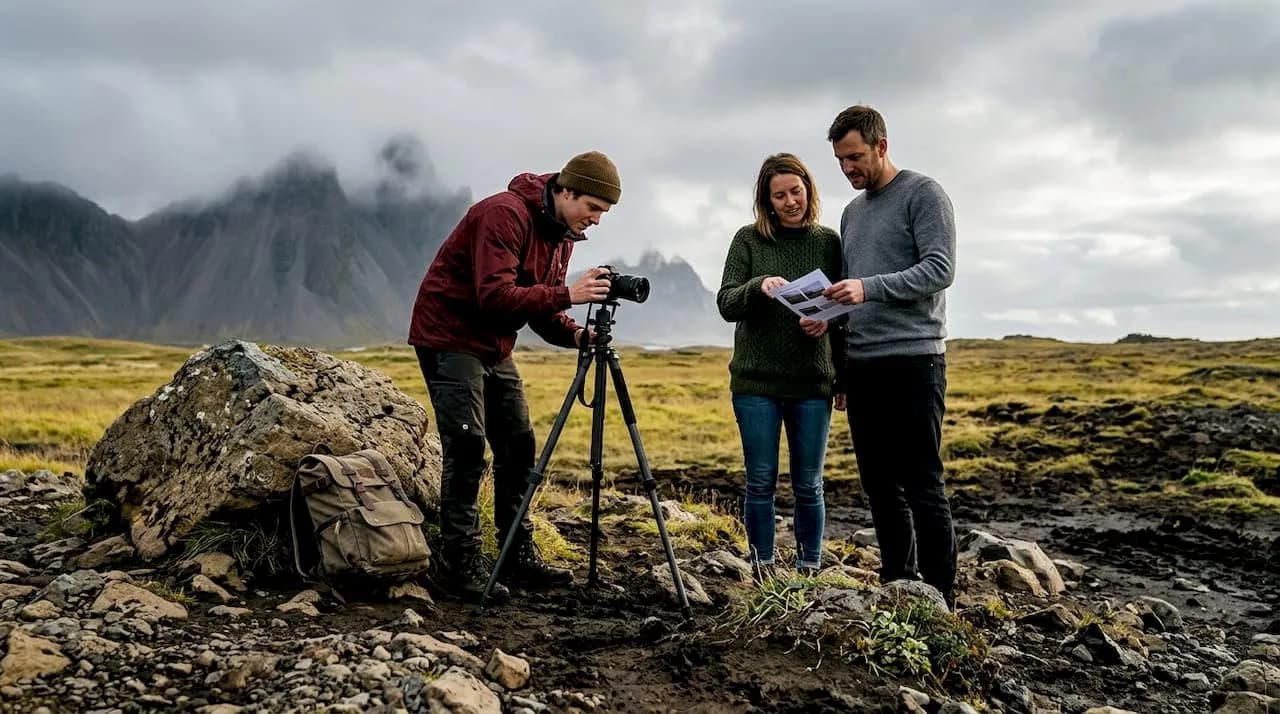
Portrait photography checklist: capture emotional Iceland moments ! Photographer prepares Icelandic outdoor portrait session > TL;DR: > > - Preparation and flexibility are crucial for capturing Iceland's dynamic landscapes and genuine emotions.
TL;DR:
- Preparation and flexibility are crucial for capturing Iceland’s dynamic landscapes and genuine emotions.
- Proper gear, weather-awareness, and storytelling techniques help create memorable outdoor portraits.
- Embracing Iceland’s weather and light unpredictability enriches the narrative and authenticity of portraits.
Balancing Iceland’s jaw-dropping scenery with the raw, unscripted emotion between two people is genuinely one of the hardest things to pull off in photography. You’re managing shifting weather, dramatic light, and two humans who may feel awkward in front of a camera, all at the same time. Outdoor portrait photography demands you hold space for both the epic and the intimate simultaneously. That’s exactly why a strategic, field-tested checklist matters so much. It removes the mental clutter so you can focus on what actually makes a portrait unforgettable: the connection, the feeling, and the story unfolding right in front of you.
Table of Contents
- Establishing your portrait photography foundation
- Essential outdoor portrait gear for Iceland
- Checklists for shooting: Technical mastery and posing
- Adapting to Iceland’s environment: Weather, light, and storytelling
- Snapshot: Full portrait photography checklist for Iceland adventures
- Hard-won lessons: What makes Iceland portraits truly memorable
- Ready for your own unforgettable Iceland portrait session?
- Frequently asked questions
Key Takeaways
| Point | Details |
|---|---|
| Preparation is priority | Thoughtful planning and communication set up every Iceland session for creative success. |
| Gear matters, but story leads | Select reliable, weatherproof equipment but focus on emotional narrative and interaction. |
| Adapt to Iceland | Make weather, light, and scenery creative partners for unique portraits. |
| Checklist reduces stress | A step-by-step list ensures nothing is missed, from prep to final shot. |
Establishing your portrait photography foundation
Every great Iceland portrait session starts long before you arrive on location. The prep work you do in the days and weeks before the shoot determines how relaxed, expressive, and emotionally present your clients will be when the moment counts.
Start by sending a wardrobe and prep guide. For Iceland’s landscapes, mid-tone colors work beautifully. Think dusty rose, sage green, warm cream, and soft navy. Avoid busy patterns or bright neon colors that compete with the scenery. Layers are both practical and photogenic, since Iceland’s weather can shift fast.
Next, use a client questionnaire to personalize the story. Ask couples how they met, what they love doing together, and what feeling they want to walk away with. These answers shape your posing prompts and location choices in ways that make each session feel specific and irreplaceable.
Scouting your Iceland locations ahead of time is non-negotiable. Study the light direction, identify natural frames, and note backup spots in case conditions change. Always build a flexible timeline with at least 30 extra minutes for weather or landscape surprises.
A preparation checklist prevents costly mistakes and keeps the session focused on story and connection rather than scrambling for gear. Here’s a solid pre-shoot sequence:
- Send wardrobe guide two weeks before the session
- Complete client questionnaire and review answers
- Scout and confirm primary and backup locations
- Build a flexible timeline with buffer time
- Set camera to aperture priority, f/1.4 to f/2.8, low ISO
- Charge all batteries and format memory cards
- Pack weather protection for gear and yourself
Pro Tip: Review your best practices for experiential photography before every session. Even experienced photographers benefit from revisiting the fundamentals when the environment is as dynamic as Iceland.
Essential outdoor portrait gear for Iceland
Iceland is not forgiving to underprepared photographers. Rain, wind, salt spray, and cold temperatures can disable gear fast. Choosing the right equipment means you spend your energy on storytelling, not troubleshooting.
A weather-sealed full-frame body is your foundation. Cameras like the Nikon Z7 II or Sony A7R V handle Iceland’s moisture and cold with confidence. Weather-sealed full-frame cameras paired with quality primes and zooms are the top gear picks for demanding outdoor portrait work.
Here’s what to pack:
- 85mm f/1.4 prime: Creates beautiful subject separation and that intimate, compressed feel couples love
- 24 to 120mm zoom: Versatile for switching between wide environmental shots and tighter portraits quickly
- Wide-angle lens: Essential for showing the full drama of glaciers, waterfalls, and black sand beaches
- 5-in-1 reflector: Bounces light into shadowed faces without adding artificial light
- Variable ND filter: Controls exposure in Iceland’s bright overcast or golden hour conditions
- Extra batteries: Cold drains batteries fast. Carry at least three fully charged
- Weatherproof wraps and lens cloths: Protect gear from rain and spray, and keep optics clean
| Gear item | Primary use | Iceland priority |
|---|---|---|
| Weather-sealed body | Durability in rain and cold | Critical |
| 85mm f/1.4 prime | Intimate portraits | High |
| 24 to 120mm zoom | Versatility | High |
| ND filter | Exposure control | Medium |
| Extra batteries | Cold weather endurance | Critical |
| 5-in-1 reflector | Natural light shaping | Medium |
For a deeper breakdown, the best lens guide for Iceland covers focal lengths, aperture trade-offs, and specific shooting scenarios across Iceland’s most iconic locations.
Pro Tip: Store spare batteries inside your jacket close to your body. Body heat keeps them warm and extends their life significantly in freezing temperatures.
Checklists for shooting: Technical mastery and posing
Once you’re on location, execution matters. A clear shooting sequence keeps you from missing moments while also ensuring your technical settings are dialed in for every condition.
The Nikon portrait photography cheat sheet recommends using eye-AF for sharp eyes, shooting between 85mm and 135mm to avoid facial distortion, choosing plain or backlit backgrounds for subject separation, and using side lighting with shallow depth of field. These aren’t just tips. They’re the difference between a portrait that stops people mid-scroll and one that gets politely skipped.
Here’s a field shooting checklist to follow on location:
- Confirm eye-AF is active and tracking correctly
- Shoot at eye level or slightly below for natural connection
- Set aperture between f/1.4 and f/2.8 depending on light
- Identify side lighting or backlit positions for depth and warmth
- Choose backgrounds that are plain, blurred, or dramatically scenic
- Introduce movement: walking, spinning, leaning into the wind
- Review a small batch of shots every 15 minutes to catch exposure issues early
- Adjust white balance if moving between shade and open sky
Movement is your secret weapon in Iceland. Wind is almost always present, and rather than fighting it, use it. Ask couples to walk toward you, lean into each other against the wind, or laugh while their hair flies. These unscripted moments read as deeply authentic in the final images. The step-by-step Iceland portrait guide and tips on how to master Iceland’s natural light are both worth studying before your first session.
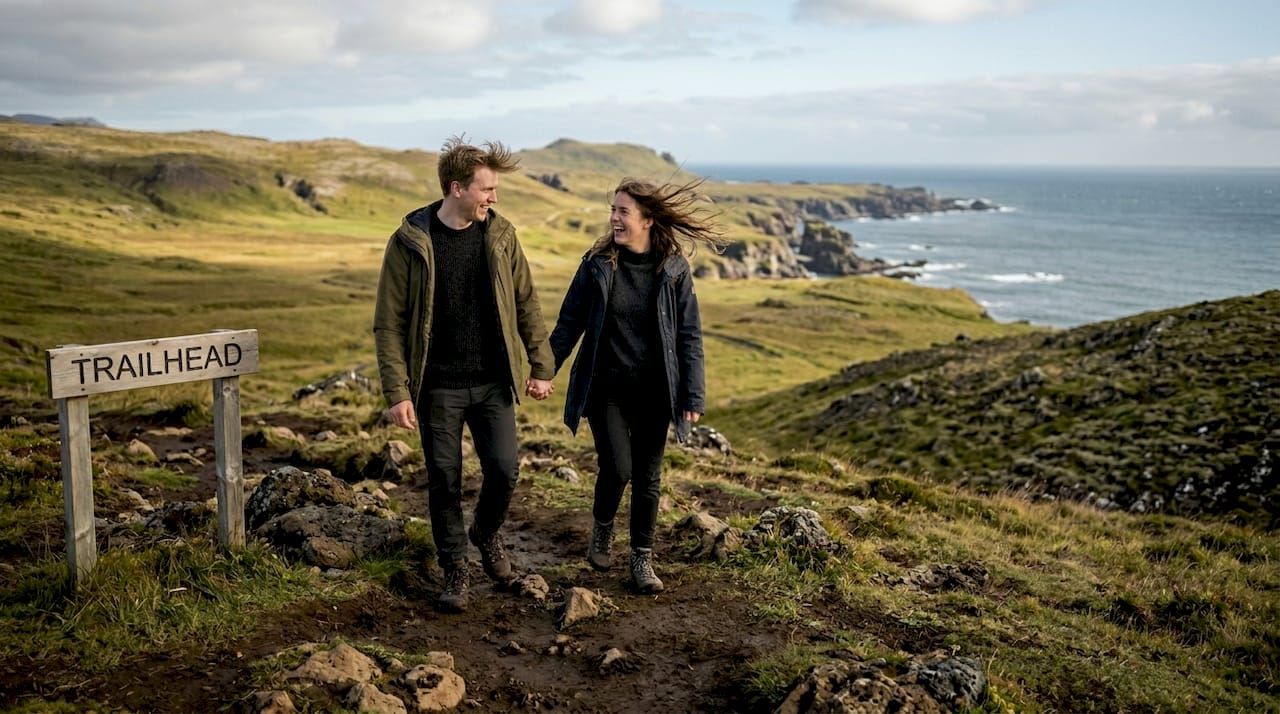
Pro Tip: If a couple looks stiff, give them a task instead of a pose. Ask them to whisper something funny to each other, or to walk and not look at the camera. Genuine reactions follow immediately.
Adapting to Iceland’s environment: Weather, light, and storytelling
Iceland’s weather is famously unpredictable. Most photographers treat this as a problem. The best ones treat it as a collaborator.
Extreme cold and wild weather can genuinely enhance portraits when approached creatively. A sudden burst of fog rolling across a glacier creates instant atmosphere. Rain on a black sand beach adds texture and mood. Wind-blown hair against a stormy sky tells a story no studio could replicate.
“The weather doesn’t ruin the shot. It writes a different story than the one you planned, and that story is often better.”
Iceland’s light is also extraordinary. In winter, golden hour lasts for hours, bathing landscapes in warm, directional light that flatters every skin tone. In summer, the midnight sun means you can shoot soft, beautiful light at 11pm. Understanding this light cycle is essential for scheduling your sessions.
Here’s a comparison of two common approaches to location choice:
| Approach | Pros | Cons |
|---|---|---|
| Iconic locations (Skógafoss, Reynisfjara) | Dramatic, recognizable backdrops | Crowds, limited exclusivity |
| Hidden gems (private glaciers, remote beaches) | Intimate, unique, story-driven | Requires more scouting |
Layering subjects within the landscape is a powerful storytelling technique. Place your couple small within a vast glacier to emphasize scale and adventure. Move in close at Reynisfjara’s basalt columns for texture and drama. Each location shapes a different emotional narrative. Explore why choose outdoor portraits and how storytelling mood in Iceland changes with your environment. For location-specific planning, mastering Iceland locations and the best Iceland photography locations are excellent references.
Snapshot: Full portrait photography checklist for Iceland adventures
This consolidated checklist is designed for real field use. Run through it before you leave home, again when you arrive on location, and once more before you hand off final images.
A thorough preparation checklist ensures every detail from prep to post-processing is covered and mistakes are kept to a minimum. Use this as your go-to reference for every Iceland session.
- Pre-session prep: Send wardrobe guide, complete client questionnaire, scout locations, build flexible timeline
- Gear check: Weather-sealed body, 85mm prime, zoom lens, ND filter, reflector, three charged batteries, lens cloths
- Camera settings: Aperture priority, f/1.4 to f/2.8, low ISO, eye-AF enabled, white balance set
- On location: Confirm light direction, identify primary and backup backgrounds, check for crowds
- Shooting sequence: Warm up with candid walking shots, introduce posing prompts, use movement and wind
- Environmental adaptation: Embrace weather changes, adjust settings for fog or sudden brightness
- Storytelling cues: Whisper prompts, movement tasks, genuine laughter triggers
- Periodic review: Check exposure and focus every 15 minutes
- End of session: Back up all files immediately to two separate storage devices
- Post-session: Cull and edit within 48 hours, deliver gallery with personal note
This sequence keeps the session flowing naturally while protecting you from the most common technical and logistical mistakes.
Hard-won lessons: What makes Iceland portraits truly memorable
Here’s something most photography guides won’t tell you: the checklist is the floor, not the ceiling.
After shooting in Iceland across all four seasons, the portraits that genuinely move people aren’t the technically perfect ones. They’re the ones where something unexpected happened and I leaned into it instead of correcting it. A wave crashing closer than expected. A sudden break in storm clouds flooding the scene with gold. A couple laughing because they were genuinely cold and slightly terrified.
The checklist gives you the structure to handle Iceland’s demands without panic. But the real work is staying present enough to notice when the moment shifts and being willing to follow it. That means letting go of the exact shot you planned and trusting what’s actually in front of you.
True storytelling in Iceland means inviting couples to engage with the landscape, not just stand in front of it. Ask them to climb the rock, wade into the shallows, or run toward the waterfall. The images that come from those moments feel alive because they are alive. Understanding how to capture Iceland’s natural light in real time is part of that presence. Wind, fog, and sudden sunlight aren’t obstacles. They’re your most unpredictable and powerful creative partners.
Ready for your own unforgettable Iceland portrait session?
If this checklist has you thinking about what your own Iceland story could look like, you’re already in the right headspace. Every session I photograph starts with exactly this kind of preparation and ends with images that feel personal, emotional, and completely unrepeatable.

I’d love to hear about your adventure and talk through what a session tailored to your journey could look like. Whether you’re planning a proposal, a couples trip, or a solo adventure, the process starts with a simple conversation. Meet your Iceland photographer to learn more about my approach and story, or go ahead and book your Iceland session to start planning something truly memorable together.
Frequently asked questions
What camera settings are best for Icelandic outdoor portraits?
Use aperture priority mode with f/1.4 to f/2.8 for beautiful depth, keep ISO low to reduce noise, and enable eye-AF for sharp portraits in any light condition.
How do you choose the best location for a couples’ shoot in Iceland?
Scout for spots that offer both privacy and strong visual interest, like quieter glacier edges or remote beaches, and always have a backup plan since Iceland’s locations vary widely in crowd levels and accessibility.
How do you keep portraits natural and emotional in challenging weather?
Encourage movement and playful interaction rather than static poses, and let the wind and rain become part of the story since authentic movement heightens emotional impact in outdoor portraits.
What gear prevents weather issues during outdoor shoots?
Prioritize a weather-sealed camera body, carry multiple lens cloths, use weatherproof wraps for your gear, and always bring spare batteries stored warm since cold conditions drain power quickly.
Why is a checklist essential for Iceland portrait sessions?
A checklist frees your mind from logistics so you can stay fully present with your clients, since preparation reduces mistakes and allows the session to focus entirely on authentic storytelling.