Photography Portfolio: Transforming Memories Into Art
Photography Portfolio: Transforming Memories Into Art ! Photographer reviewing portfolio prints at home Every traveler who wanders through Iceland’s dramatic landscapes knows the urge to capture more than just breathtaking views.

Every traveler who wanders through Iceland’s dramatic landscapes knows the urge to capture more than just breathtaking views. Creating a photography portfolio brings those memories alive, transforming raw adventure into a coherent story packed with emotion and artistry. This guide reveals how a photography portfolio becomes your personal calling card, sharing your unique experiences with depth and authenticity while ensuring every image truly reflects your journey and style.
Table of Contents
- Defining A Photography Portfolio And Its Purpose
- Key Portfolio Types And Their Unique Roles
- Essential Elements For Effective Storytelling
- Curating Style And Emotional Impact
- Common Mistakes In Portfolio Creation
- Using Portfolios To Connect With Clients
Key Takeaways
| Point | Details |
|---|---|
| Photography Portfolio Definition | A photography portfolio is a curated visual narrative showcasing a photographer’s artistic vision, technical skills, and storytelling abilities. |
| Types of Portfolios | Different portfolio types, such as Showcase and Process Portfolios, serve distinct purposes and target varying audiences based on professional objectives. |
| Elements of Effective Storytelling | Compelling photographic storytelling relies on emotional connection, cohesive structure, and strategic composition to engage viewers deeply. |
| Avoiding Common Mistakes | Key pitfalls in portfolio creation include visual inconsistency and a lack of narrative, emphasizing the need for careful curation and audience alignment. |
Defining a Photography Portfolio and Its Purpose
A photography portfolio is far more than a simple collection of images. It serves as a visual narrative that communicates a photographer’s unique artistic vision, technical skills, and storytelling capabilities. Capturing powerful visual stories requires intentional curation and strategic presentation of one’s most compelling work.
At its core, a photography portfolio functions as a professional calling card that showcases a photographer’s distinctive style and capabilities. Key elements include:
- Representation of technical proficiency
- Demonstration of artistic perspective
- Reflection of personal creative identity
- Evidence of consistent visual storytelling
Photographers develop portfolios to communicate their creative approach and attract potential clients or collaborators. Personal business cards in visual form, these collections go beyond mere images to represent an artist’s entire professional identity across multiple platforms.
Successful portfolios balance technical excellence with emotional resonance. They tell a story not just through individual photographs, but through the carefully constructed narrative created by image selection, sequencing, and presentation. Each photograph becomes a chapter in the photographer’s broader artistic journey.
Pro tip: Curate your portfolio with intention, selecting images that not only demonstrate technical skill but also reveal your unique creative voice and emotional depth.
Key Portfolio Types and Their Unique Roles
Photographers can develop multiple portfolio types, each serving a distinct purpose in showcasing their creative capabilities. Different portfolio styles document unique aspects of a photographer’s professional journey and artistic vision.
The primary portfolio types include:
- Showcase Portfolio: Highlights the most exceptional and polished images
- Process Portfolio: Documents the creative development and evolution of projects
- Interactive Portfolio: Enables deeper audience engagement through multimedia elements
- Learning Portfolio: Tracks professional growth and skill progression
- Assessment Portfolio: Designed for external review and professional evaluation
Each portfolio type communicates different dimensions of a photographer’s expertise. Work-integrated portfolios connect academic training with real-world professional assignments, demonstrating practical application of creative skills.
The strategic selection and presentation of portfolio type depends on the intended audience and professional objectives. A showcase portfolio might target potential clients, while a process portfolio could appeal to educational institutions or artistic collaborators interested in understanding the photographer’s creative methodology.
Here’s a summary comparing major photography portfolio types and their ideal uses:
| Portfolio Type | Ideal Audience | Key Benefit |
|---|---|---|
| Showcase Portfolio | Potential clients | Impress with best work |
| Process Portfolio | Educators, collaborators | Reveal creative methodology |
| Interactive Portfolio | Online visitors | Foster engagement and interest |
| Learning Portfolio | Mentors, yourself | Track ongoing skill growth |
| Assessment Portfolio | Reviewers, employers | Demonstrate meeting standards |
Pro tip: Develop multiple portfolio types that collectively showcase your versatility, technical skills, and unique creative perspective.
Essential Elements for Effective Storytelling
Narrative photography transforms individual images into powerful visual stories that capture emotion, context, and human experience. Core storytelling elements require intentional composition and strategic image selection to create meaningful visual narratives.
The fundamental components of compelling photographic storytelling include:
- Emotional Connection: Creating images that resonate with viewers’ feelings
- Context and Narrative Structure: Sequencing images to build a cohesive story
- Visual Composition: Using lighting, perspective, and framing strategically
- Character and Action: Highlighting subjects that drive the narrative
- Thematic Consistency: Maintaining a unified visual and emotional thread
Narrative photography transcends traditional image capturing by transforming photographs from isolated moments into a deeply engaging visual journey. Photographers must carefully select and arrange images to guide viewers through a meaningful emotional experience, using visual cues that spark imagination and connection.
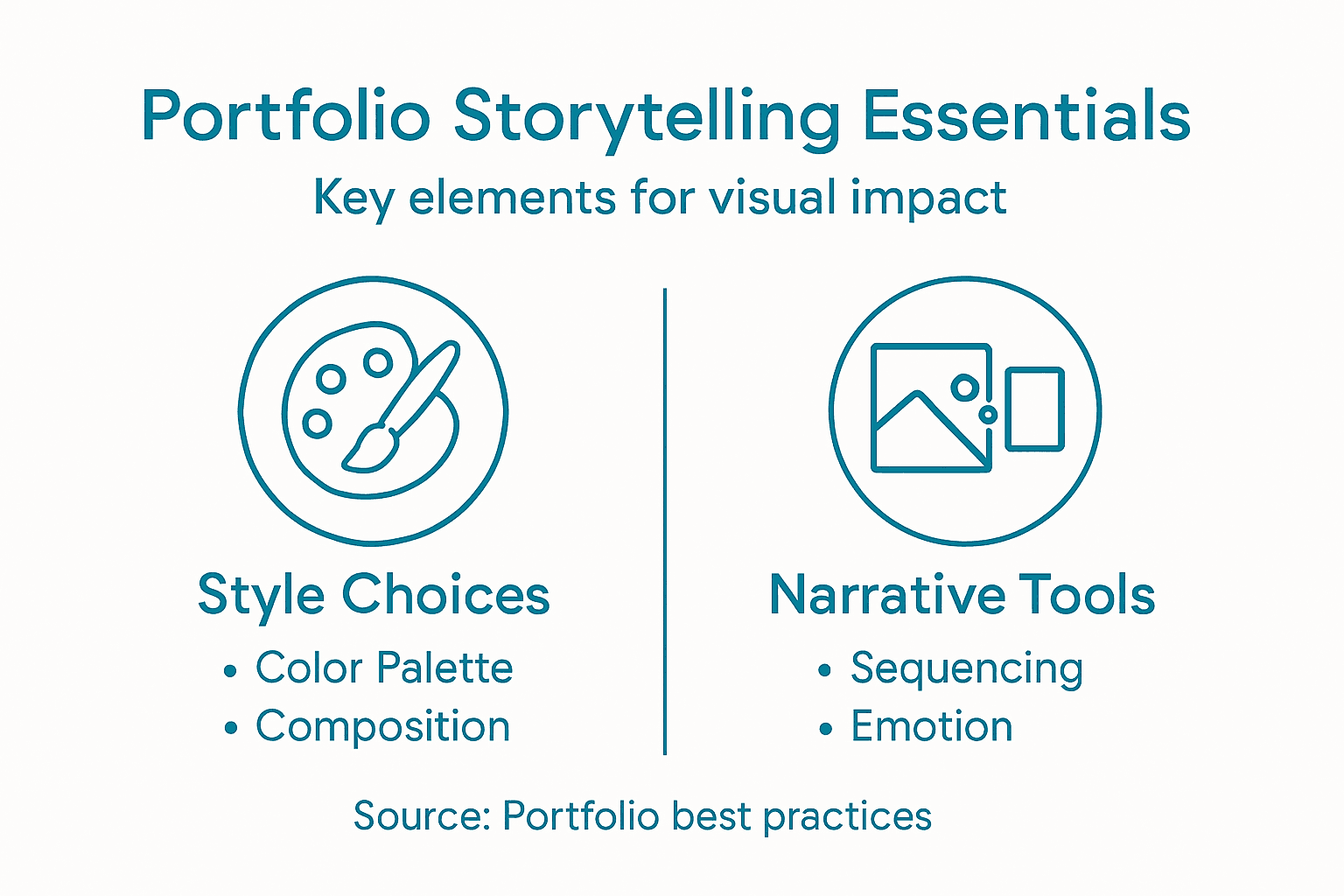
Successful storytelling requires more than technical skill. It demands an intuitive understanding of how images interact, how emotions flow between frames, and how seemingly disparate moments can be woven into a compelling narrative that speaks directly to the viewer’s heart.
Pro tip: Think of your photo series as a visual poem, where each image is a carefully chosen word that contributes to a larger, more profound meaning.
Curating Style and Emotional Impact
Photo curation is an art form that transforms individual images into a powerful visual narrative. Psychological mechanisms behind photography reveal how carefully selected images can connect deeply with human emotions and social experiences.
Key strategies for effective photo curation include:
- Emotional Authenticity: Selecting images that genuinely reflect lived experiences
- Visual Consistency: Maintaining a coherent aesthetic and tonal approach
- Narrative Flow: Arranging images to create a meaningful progression
- Emotional Depth: Choosing photographs that evoke complex feelings
- Personal Branding: Developing a recognizable photographic signature
Photo curation goes beyond technical selection by creating a meaningful visual identity that communicates the photographer’s unique perspective. Each image becomes a carefully chosen word in a larger emotional language, designed to resonate with viewers on a profound level.
Successful curation requires an intuitive understanding of how images interact, how colors and compositions create emotional landscapes, and how seemingly disparate moments can be woven into a compelling visual story that speaks directly to the viewer’s inner world.

Consider how curation choices influence emotional and professional impact:
| Curation Aspect | Emotional Influence | Professional Value |
|---|---|---|
| Emotional Authenticity | Builds audience trust | Highlights genuine artistic voice |
| Visual Consistency | Creates mood continuity | Establishes strong brand identity |
| Narrative Flow | Guides viewer emotions | Demonstrates storytelling expertise |
| Personal Branding | Evokes recognition | Attracts targeted opportunities |
Pro tip: Treat your photo collection like a carefully composed symphony, where each image is a note that contributes to the overall emotional resonance.
Common Mistakes in Portfolio Creation
Portfolio creation requires strategic thinking and careful curation. Portfolio design mistakes can significantly undermine a photographer’s professional presentation and impact.
The most critical portfolio mistakes include:
- Visual Inconsistency: Mixing disparate styles and aesthetic approaches
- Quantity Over Quality: Including too many mediocre images
- Lack of Narrative: Failing to create a cohesive storytelling structure
- Poor Navigation: Creating complicated or confusing portfolio layouts
- Audience Misalignment: Not tailoring content to specific professional goals
Effective portfolio design demands authenticity and strategic content selection. Photographers must carefully curate images that not only showcase technical skills but also communicate a unique personal vision and professional identity.
Successful portfolios require ruthless editing, emotional intelligence, and a deep understanding of how visual narratives communicate professional capabilities. Each image must serve a specific purpose, contributing to an overarching story that captivates and convinces potential clients or collaborators.
Pro tip: Treat your portfolio like a carefully crafted movie trailer - select only the most compelling scenes that make viewers want to see more.
Using Portfolios to Connect With Clients
Client connections are forged through strategic visual storytelling and intentional portfolio presentation. Portfolios communicate professional identity by revealing an artist’s unique perspective and technical capabilities.
Key strategies for client engagement through portfolios include:
- Targeted Curation: Selecting images that resonate with specific client needs
- Emotional Storytelling: Creating narratives that evoke meaningful connections
- Professional Consistency: Maintaining a cohesive visual brand
- Strategic Presentation: Arranging images for maximum impact
- Client-Focused Approach: Understanding and addressing audience expectations
Portfolio interactions require strategic preparation that goes beyond simply displaying work. Photographers must craft a visual journey that speaks directly to potential clients’ aspirations and challenges, demonstrating not just technical skill but a profound understanding of visual communication.
Successful client connections emerge from portfolios that tell a compelling story, balance technical excellence with emotional resonance, and invite collaboration. Each image becomes a conversation starter, a window into the photographer’s unique vision and professional approach.
Pro tip: Treat your portfolio as a strategic dialogue, where every image is a carefully chosen word that speaks directly to your client’s imagination and needs.
Transform Your Memories Into Timeless Visual Stories
Building a photography portfolio that truly captures your unique journey and emotions can be challenging. The article highlights the importance of intentional curation, emotional authenticity, and storytelling to create a portfolio that resonates deeply with viewers and potential clients. If your goal is to showcase your Icelandic adventures or personal stories through powerful visual narratives that connect on a profound level, then a specialized and personal approach is essential.
Lucy Moments PHOTOGRAPHER understands these core challenges and transforms your experiences into captivating photographic art. Whether you are seeking breathtaking landscapes or intimate moments during your Icelandic journey, every image is carefully selected and presented to reflect your story with emotional depth and stylistic consistency. Explore the fusion of nature’s rugged beauty and your personal narrative through a portfolio that goes beyond simple pictures.
Unlock the power of storytelling through photography with our expert portfolio creation and service offerings. Visit Lucy Moments PHOTOGRAPHER to discover how we craft compelling visual journeys. Learn more about the artistic approach and availability for bookings on our main site. Ready to elevate your memories into an unforgettable portfolio? Take the next step and connect with us today.
Transform your personal story with the artistry of narrative photography and experience the impact of a portfolio designed to captivate and inspire.
Experience more at Lucy Moments PHOTOGRAPHER

Start your transformative photography journey now and create memories that speak directly to your heart.
Frequently Asked Questions
What is a photography portfolio?
A photography portfolio is a curated collection of a photographer’s best work that showcases their artistic vision, technical skills, and storytelling abilities.
How do I choose images for my photography portfolio?
Select images that demonstrate your technical proficiency and reveal your unique creative voice. Focus on emotional depth and storytelling to create a cohesive narrative.
What types of photography portfolios exist?
Common portfolio types include showcase, process, interactive, learning, and assessment portfolios, each serving different purposes in showcasing a photographer’s skills and experiences.
How can I effectively tell a story through my photography portfolio?
Utilize emotional connection, context, visual composition, and thematic consistency in your image selection and arrangement to guide viewers through a meaningful visual narrative.