Photographer as Storyteller: Impact in Icelandic Journeys
Photographer as Storyteller: Impact in Icelandic Journeys ! Photographer prepares camera amid Icelandic landscape Chasing the untamed beauty of Iceland, every adventure-seeker wants their story to live beyond the moment.
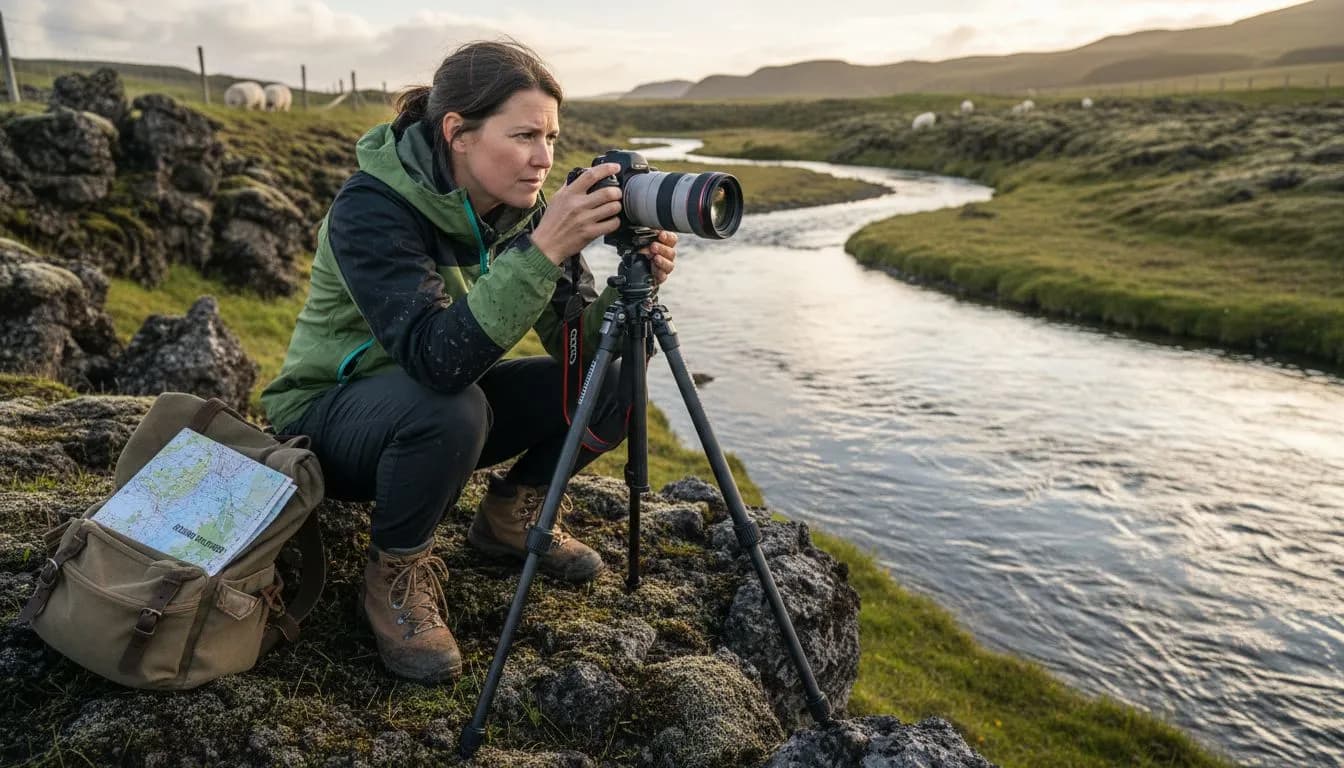
Chasing the untamed beauty of Iceland, every adventure-seeker wants their story to live beyond the moment. In a world where images speak louder than words, the true power of photography lies in its ability to connect hearts to unseen worlds and raw emotions, not just scenery. By embracing photographers as visual storytellers—especially in the context of Iceland’s dramatic landscapes—you create images that resonate long after the journey ends, capturing emotion, spirit, and the deep magic woven through each frame.
Table of Contents
- Defining The Photographer’s Storytelling Role
- Types Of Visual Narratives In Photography
- Unique Features Of Icelandic Landscape Storytelling
- Building Emotional Connection With Clients
- Risks, Challenges, And Ethical Considerations
- Avoiding Common Mistakes In Visual Storytelling
Key Takeaways
| Point | Details |
|---|---|
| Storytelling in Photography | Photographers serve as visual storytellers, capturing emotional moments that resonate with audiences. |
| Icelandic Landscape Narratives | Dramatic landscapes in Iceland amplify storytelling, revealing themes of isolation and resilience. |
| Building Client Connections | Establishing emotional connections with clients transforms photography into a meaningful storytelling experience. |
| Ethical Considerations | Photographers must navigate ethical challenges, ensuring authenticity and respect for subjects in their narratives. |
Defining the Photographer’s Storytelling Role
Photography transcends mere visual documentation - it is a profound medium for narrative expression. Photographers serve as visual storytellers, transforming fleeting moments into powerful, emotionally resonant experiences that connect viewers with unseen worlds. In the context of Icelandic landscapes, this storytelling role becomes even more nuanced and compelling.
The art of photographic storytelling involves several critical elements:
- Emotional Context: Capturing the underlying sentiment of a moment
- Visual Narrative: Constructing a coherent story through sequential or singular images
- Cultural Translation: Communicating complex experiences across different cultural perspectives
- Ethical Representation: Maintaining authenticity and respect for subjects
Professional photographers navigate complex challenges when telling stories through images. They must balance artistic vision with journalistic integrity, selecting and framing moments that communicate deeper truths about human experience.
In Icelandic photography, this storytelling approach becomes particularly powerful. The dramatic landscapes serve not just as backdrops but as narrative characters themselves - conveying isolation, resilience, and the raw beauty of natural environments. Photographers become interpreters, translating the silent language of terrain into visual poetry that resonates with viewers.
Pro tip: When approaching photographic storytelling, focus on capturing authentic emotional moments rather than perfectly staged scenes.
Types of Visual Narratives in Photography
Photography offers multiple approaches to visual storytelling, each with unique characteristics and emotional resonance. Narrative photography techniques provide photographers with powerful tools to communicate complex experiences through carefully crafted images, transforming visual documentation into profound storytelling mediums.
The primary types of visual narratives include:
- Documentary Narrative: Capturing authentic moments with minimal intervention
- Conceptual Narrative: Using symbolic imagery to communicate abstract ideas
- Staged Narrative: Deliberately constructing scenes to convey specific emotional or thematic messages
- Sequential Narrative: Creating stories through a series of interconnected images
In Icelandic photography, these narrative approaches take on extraordinary dimensions. The dramatic landscapes become more than backdrops - they transform into active storytelling elements, communicating themes of isolation, resilience, and natural beauty. Each photographic style offers a different lens through which viewers can understand and interpret the complex visual language of the environment.
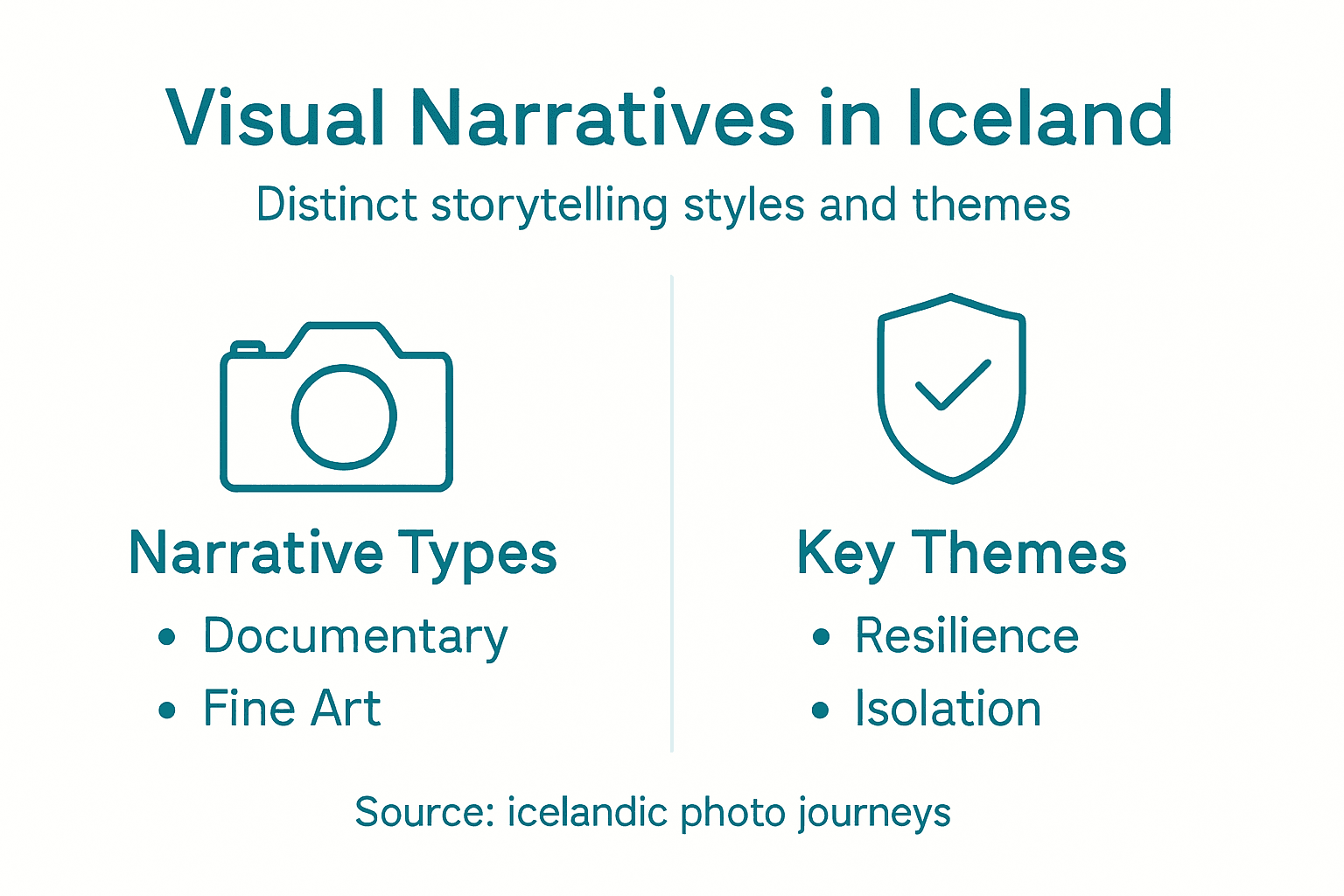
Visual narratives extend beyond simple image capture, representing sophisticated methods of communication that can transcend linguistic and cultural boundaries. Photographers become sophisticated translators, using composition, lighting, and subject selection to weave intricate stories that resonate deeply with viewers across different contexts and experiences.
Pro tip: Experiment with multiple narrative styles to discover which best captures the emotional essence of your photographic subject.
Here’s a summary of narrative photography approaches and their ideal uses:
| Narrative Type | Main Strength | Ideal Application |
|---|---|---|
| Documentary | Authenticity | Capturing real-life events |
| Conceptual | Symbolism | Expressing abstract ideas |
| Staged | Creative control | Storytelling with specific messages |
| Sequential | Story depth | Chronicling change over time |
Unique Features of Icelandic Landscape Storytelling
Icelandic landscape photography transcends traditional visual documentation, emerging as a profound narrative medium that weaves together geological drama, cultural mythology, and human experience. Landscape storytelling in Iceland represents a unique intersection of natural spectacle and deeply rooted cultural heritage.
The distinctive characteristics of Icelandic landscape storytelling include:
- Geological Narrative: Capturing the dynamic interactions between volcanic terrain, glaciers, and light
- Cultural Mythology: Integrating local folklore and historical sagas into visual representations
- Emotional Topography: Revealing the psychological landscape alongside physical terrain
- Temporal Dynamics: Documenting the constant transformation of landscapes through seasonal changes
Icelandic photographers serve as visual translators, transforming raw landscapes into complex narratives that communicate far more than simple geographical representations. The dramatic environments become active storytellers, with each volcanic rock, glacial formation, and sweeping horizon carrying layers of meaning that extend beyond visual aesthetics.
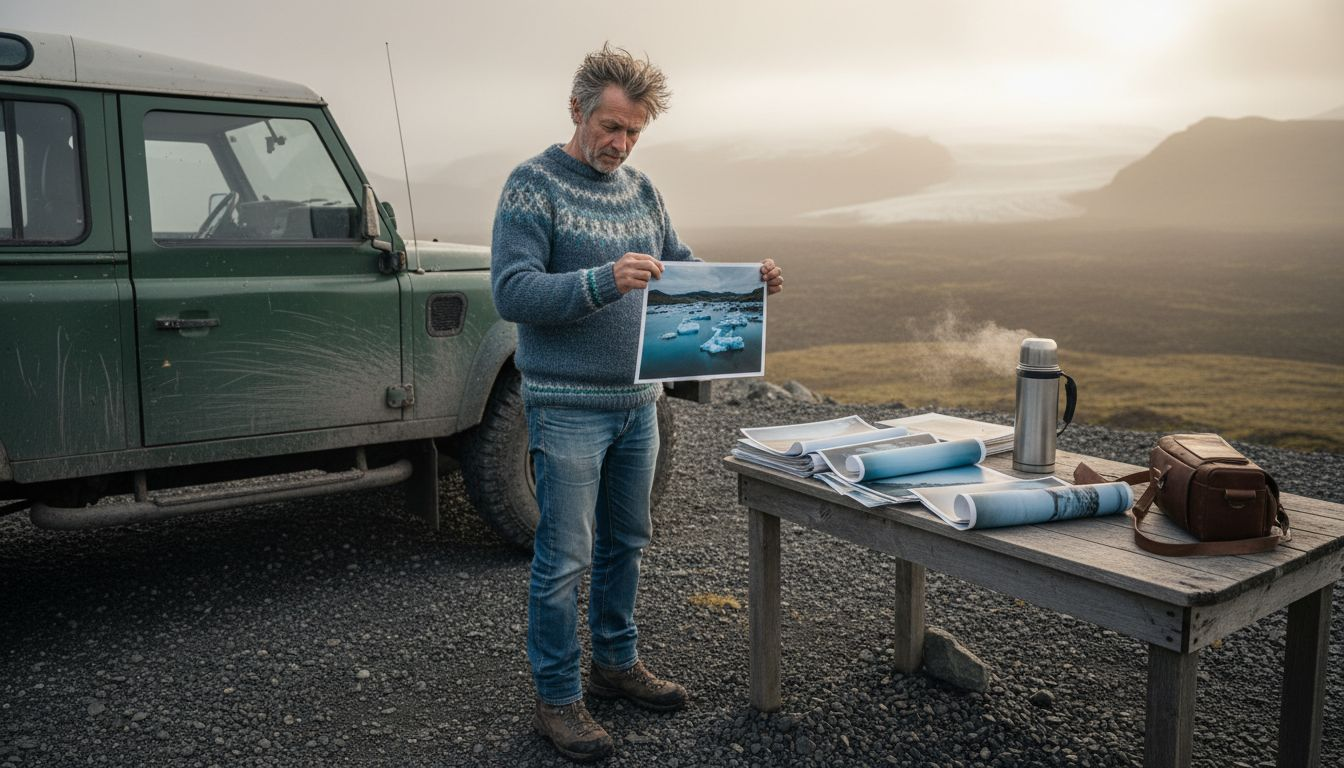
This approach to landscape storytelling is particularly powerful because it connects viewers to a profound sense of place, revealing the intricate relationships between human experience and natural environments. By capturing the nuanced interactions of light, terrain, and cultural memory, photographers create visual narratives that are simultaneously personal and universal.
Pro tip: When photographing Icelandic landscapes, look beyond the visual surface and seek the underlying stories embedded in the terrain.
Building Emotional Connection With Clients
Establishing deep emotional connections transforms photography from a transactional service into a profound storytelling experience. Storytelling creates powerful client relationships by bridging personal narratives with visual expression, making each photograph a meaningful representation of individual journeys.
Key strategies for building emotional connections include:
- Active Listening: Understanding clients’ unique stories and personal contexts
- Vulnerability Sharing: Revealing aspects of your own photographic journey
- Collaborative Narrative Design: Involving clients in conceptualizing their visual story
- Empathetic Communication: Demonstrating genuine interest beyond professional interactions
Photographers who excel at emotional connection recognize that each client interaction is an opportunity to create a deeply personalized experience. This approach goes beyond technical skill, focusing on creating a safe, comfortable environment where clients feel truly seen and understood. By treating each photographic session as a collaborative storytelling process, photographers can transform simple image capture into a meaningful, memorable journey.
The most powerful connections emerge when photographers approach their work with authenticity, compassion, and a genuine commitment to representing each client’s unique narrative. This emotional resonance turns photographs from mere images into profound personal artifacts that capture not just visual moments, but the essence of human experience.
Pro tip: Practice active listening during initial consultations, allowing clients to share their stories and emotional landscapes before picking up the camera.
Risks, Challenges, and Ethical Considerations
Photographers navigating the complex landscape of storytelling must confront numerous ethical challenges that extend far beyond technical skill. Ethical photography demands careful navigation of consent, representation, and cultural sensitivity, transforming image-making into a profound act of responsible storytelling.
Key ethical challenges include:
- Informed Consent: Securing genuine permission from subjects
- Cultural Representation: Avoiding stereotyping and misrepresentation
- Digital Manipulation: Maintaining authenticity in image editing
- Privacy Protection: Respecting subjects’ personal boundaries
- Power Dynamics: Acknowledging unequal relationships between photographer and subject
The digital age has intensified these ethical considerations, introducing complex technological dimensions that challenge traditional photographic practices. Emerging technologies like AI and advanced editing tools create new dilemmas around image authenticity, requiring photographers to develop sophisticated ethical frameworks that prioritize human dignity and narrative integrity.
Ultimately, ethical photography is about maintaining a delicate balance between artistic expression and human respect. Photographers must continuously interrogate their own biases, intentions, and potential impacts, recognizing that each image carries profound implications for how individuals and communities are perceived and understood.
Pro tip: Develop a personal ethical checklist that you review before every photographic project to ensure respectful and authentic representation.
Compare key challenges and solutions in ethical visual storytelling:
| Challenge | Impact on Storytelling | Practical Solution |
|---|---|---|
| Informed consent | Undermines trust | Always obtain permission |
| Cultural representation | May reinforce stereotypes | Research subjects deeply |
| Digital manipulation | Diminishes authenticity | Limit extreme edits |
| Privacy protection | Risks subject discomfort | Blur sensitive details |
| Power dynamics | Skewed perspectives | Engage subjects equally |
Avoiding Common Mistakes in Visual Storytelling
Visual storytelling is a delicate art that requires precision, intentionality, and a deep understanding of narrative principles. Visual storytelling demands strategic planning to create compelling, coherent narratives that engage and resonate with viewers.
Common mistakes photographers should consciously avoid include:
- Information Overload: Cramming too many visual elements into a single frame
- Compositional Weakness: Ignoring fundamental design principles like rule of thirds
- Narrative Confusion: Failing to establish a clear storytelling arc
- Emotional Disconnection: Creating technically perfect but emotionally sterile images
- Technical Inconsistency: Disrupting visual flow with jarring editing or lighting choices
Successful visual storytelling requires a holistic approach that balances technical skill with emotional intelligence. Photographers must learn to curate their visual narratives carefully, selecting images that work together to create a cohesive and meaningful story, rather than simply collecting aesthetically pleasing but disconnected shots.
The most powerful visual stories emerge when photographers approach their work with intentionality, understanding that each image is not just a standalone moment, but a crucial part of a larger narrative landscape. By maintaining focus, emotional clarity, and strategic visual design, photographers can transform potential mistakes into opportunities for deeper storytelling.
Pro tip: Always review your image sequence as a complete narrative, not just individual photographs, to ensure consistent emotional and visual flow.
Transform Your Icelandic Journey into a Visual Story
The article highlights the power and challenge of photographers serving as storytellers who capture not only landscapes but deep emotional narratives. If you seek to avoid common pitfalls like narrative confusion or emotional disconnection and want your personal Icelandic adventure documented with authenticity and poetic resonance, this is your solution. Lucy Moments PHOTOGRAPHER specializes in merging cultural and emotional storytelling with Iceland’s breathtaking terrain. From active listening to collaborative narrative design, Lucy crafts a visual narrative that truly reflects your unique experience in this land of raw beauty.

Capture your story with an expert who understands the ethical and emotional complexities of visual storytelling. Visit Lucy Moments PHOTOGRAPHER to explore how your Icelandic journey can become a deeply personal visual narrative. Start your adventure today by booking a session designed to connect your story with the dramatic Icelandic landscapes that frame it. Discover more insights and get inspired by the portfolio at Lucy Moments PHOTOGRAPHER. Take the first step to commemorating your experience in a way that goes beyond the ordinary at Lucy Moments PHOTOGRAPHER.
Frequently Asked Questions
What is the role of a photographer in storytelling?
A photographer serves as a visual storyteller, capturing moments and emotions to create powerful narratives that resonate with viewers.
How do landscape features contribute to storytelling in photography?
Landscape features enhance storytelling by serving as active characters that communicate themes such as isolation, resilience, and natural beauty, adding depth to the visual narrative.
What are common mistakes to avoid in visual storytelling?
Common mistakes include information overload, compositional weakness, narrative confusion, emotional disconnection, and technical inconsistency, all of which can disrupt the overall storytelling arc.
How can photographers build emotional connections with their clients?
Photographers can build emotional connections by practicing active listening, sharing their own stories, collaborating on narrative design, and communicating empathetically, creating a personalized experience for each client.