Guide to location scouting Iceland for stunning photos
Guide to location scouting Iceland for stunning photos ! Photographer scouting rugged Iceland location Iceland's raw beauty draws photographers worldwide, but its unpredictable weather and remote terrain can turn a dream shoot into a logistical nightmare.
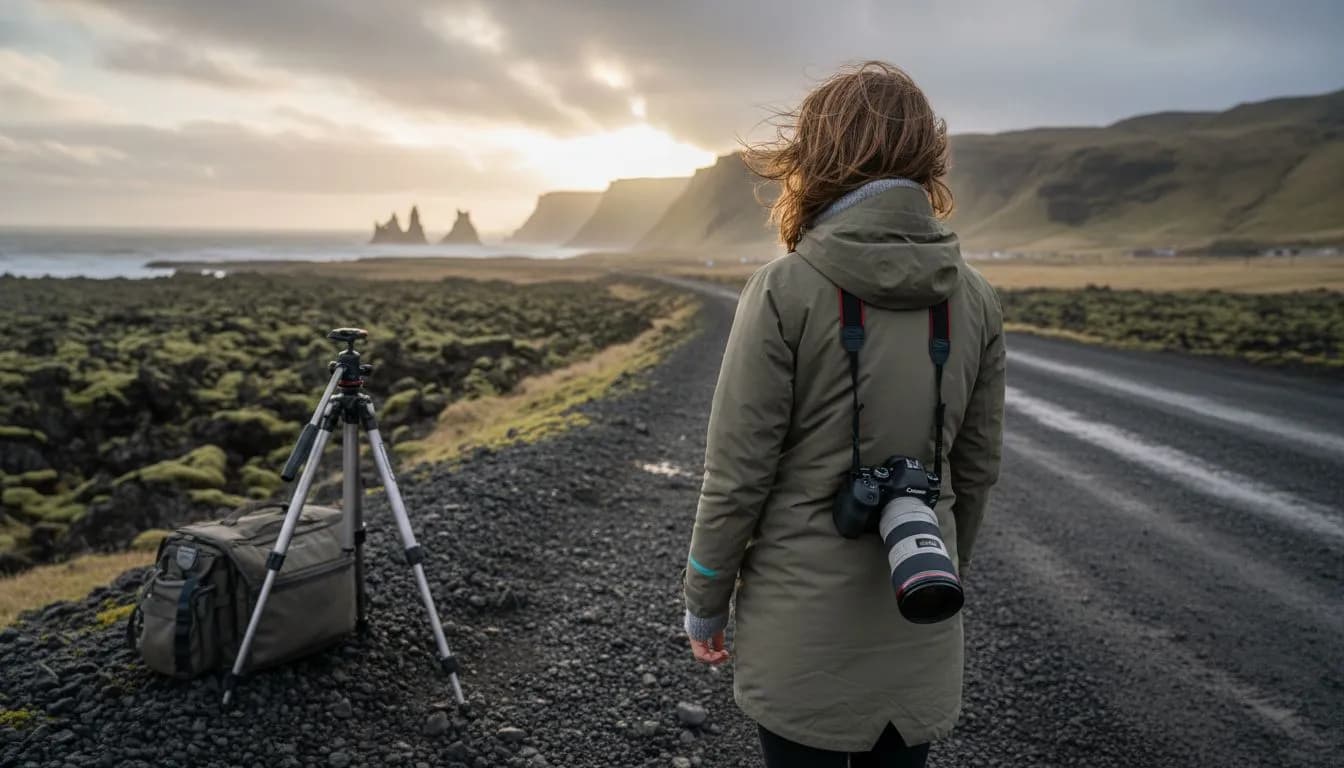
Iceland’s raw beauty draws photographers worldwide, but its unpredictable weather and remote terrain can turn a dream shoot into a logistical nightmare. Successful location scouting requires more than just marking spots on a map. You need the right gear, flexible planning, and local knowledge to capture those breathtaking landscapes. This guide walks you through essential preparation, safety considerations, and proven techniques to scout and photograph Iceland’s most dramatic locations, ensuring you return home with portfolio-worthy images regardless of what Mother Nature throws your way.
Table of Contents
- Essential Gear And Clothing For Iceland Photography
- Planning Your Itinerary: Timing, Safety, And Flexibility
- Pro Tips And Techniques For Effective Location Scouting In Iceland
- Explore Professional Iceland Photography With Lucy Moments
- Frequently Asked Questions
Key takeaways
| Point | Details |
|---|---|
| Weather-sealed gear | Protect your camera and lenses from Iceland’s rain, wind, and spray with weather-resistant equipment and covers. |
| Flexible itineraries | Build 2-3 day buffers into your travel plans to accommodate weather delays and road closures. |
| Essential filters | ND and polarizing filters help control Iceland’s dramatic light and enable long exposure shots. |
| Seasonal planning | Choose winter for northern lights, summer for midnight sun, or autumn for vibrant colors and fewer crowds. |
| Safety first | Monitor weather forecasts multiple times daily and check road conditions before driving to remote locations. |
Essential gear and clothing for Iceland photography
Iceland’s environment tests both photographer and equipment. The unpredictable weather in Iceland necessitates weather-sealed camera equipment for reliable performance. Your camera body and lenses must withstand sudden rain, ocean spray, and volcanic dust without failing mid-shoot.
Wide-angle lenses between 14mm and 35mm capture Iceland’s vast landscapes most effectively. A 16-35mm f/2.8 or 14-24mm f/2.8 lens gives you the flexibility to frame sweeping vistas and dramatic foregrounds. Bring at least one telephoto lens (70-200mm) for isolating distant features like glaciers and mountain peaks.
Your tripod determines whether you return with sharp images or blurry disappointments. Iceland’s notorious winds demand a sturdy carbon fiber tripod with a hook for adding weight. Cheap, lightweight tripods will vibrate in the wind, ruining long exposures. Invest in quality legs and a reliable ball head that locks firmly.
Filters transform good shots into exceptional ones:
- Neutral density (ND) filters for silky waterfall effects and cloud motion
- Polarizing filters to reduce glare on wet rocks and enhance sky contrast
- Graduated ND filters to balance bright skies with darker foregrounds
- UV filters as lens protection against sand and spray
Clothing layers make or break your shooting comfort. Start with moisture-wicking base layers that pull sweat away from your skin. Add an insulated mid-layer like fleece or down for warmth. Top it with a waterproof, windproof shell jacket and pants. Skip cotton entirely, as it stays wet and steals body heat.
Pro Tip: Cold temperatures drain camera batteries 30-50% faster than normal. Carry at least three spare batteries and keep them warm in inside jacket pockets, rotating them as needed.
Memory cards and cleaning supplies round out your kit. Bring twice as many cards as you think necessary, as you will shoot more than planned. Pack a rocket blower, microfiber cloths, and lens cleaning solution to handle the constant battle against water droplets and dust.
Planning your itinerary: timing, safety, and flexibility
Renting a 4x4 or all-wheel drive vehicle is non-negotiable for winter photography trips. Iceland’s F-roads (mountain roads) require four-wheel drive by law, and even Ring Road sections become treacherous during storms. Standard rental cars leave you stranded when conditions deteriorate.
Weather checking becomes a ritual in Iceland. Visit safetravel.is, vedur.is, and road.is at least three times daily: morning, midday, and before bed. Conditions shift rapidly, and a clear morning can become a whiteout by afternoon. Set alerts for your planned locations to receive warnings about closures or dangerous conditions.
Travelers should build a buffer of 2-3 days in their itinerary to account for potential road closures due to winter storms, ensuring they can reach the airport on time. This flexibility separates successful trips from stressful ones. If weather blocks your primary location, you can pivot to alternatives without losing shooting time.
Seasonal considerations shape your entire trip:
- Winter (November to March) offers northern lights and dramatic ice caves but brings short days and challenging driving
- Summer (June to August) provides midnight sun for extended shooting sessions and accessible highlands but attracts peak crowds
- Autumn (September to October) delivers fall colors, fewer tourists, and moderate weather with occasional aurora displays
- Spring (April to May) brings melting waterfalls and longer days but unpredictable snow conditions
Driving safety requires constant attention. Black ice forms invisibly on roads, especially near water features and in shaded areas. Reduce speed by 30-40% from posted limits when conditions look questionable. If you encounter a snowstorm, pull over and wait it out rather than pushing forward. GPS coordinates fail in remote areas, so download offline maps and carry physical backups.
“Iceland’s weather can change in minutes. What starts as a beautiful sunrise can turn into a storm that grounds you for hours. Always have a backup plan and respect nature’s power.” – Experienced Iceland photographer
Notify your accommodation about daily plans and expected return times. Planning your Iceland photo tour requires communication with locals who understand current conditions. They often provide invaluable insights about road status and alternative routes.
Booking photography in Iceland involves coordinating permits for certain locations and respecting private property. Some waterfalls and landmarks require parking fees or advance reservations during peak season. Research these requirements weeks before departure to avoid disappointment.
Pro tips and techniques for effective location scouting in Iceland
Timing separates ordinary photos from extraordinary ones. The best time to photograph Skógafoss waterfall is at sunrise or sunset to capture the light hitting the falls at an angle. Golden hour transforms the water into liquid gold, while harsh midday sun creates unflattering contrast and blown highlights.
Skógafoss offers multiple vantage points worth exploring. The classic shot from the base showcases the waterfall’s full 60-meter drop with rainbow potential in morning light. Climb the 527 steps to the top for a completely different perspective looking down the river canyon. Arrive 45 minutes before sunrise to set up and test compositions in the pre-dawn blue hour.
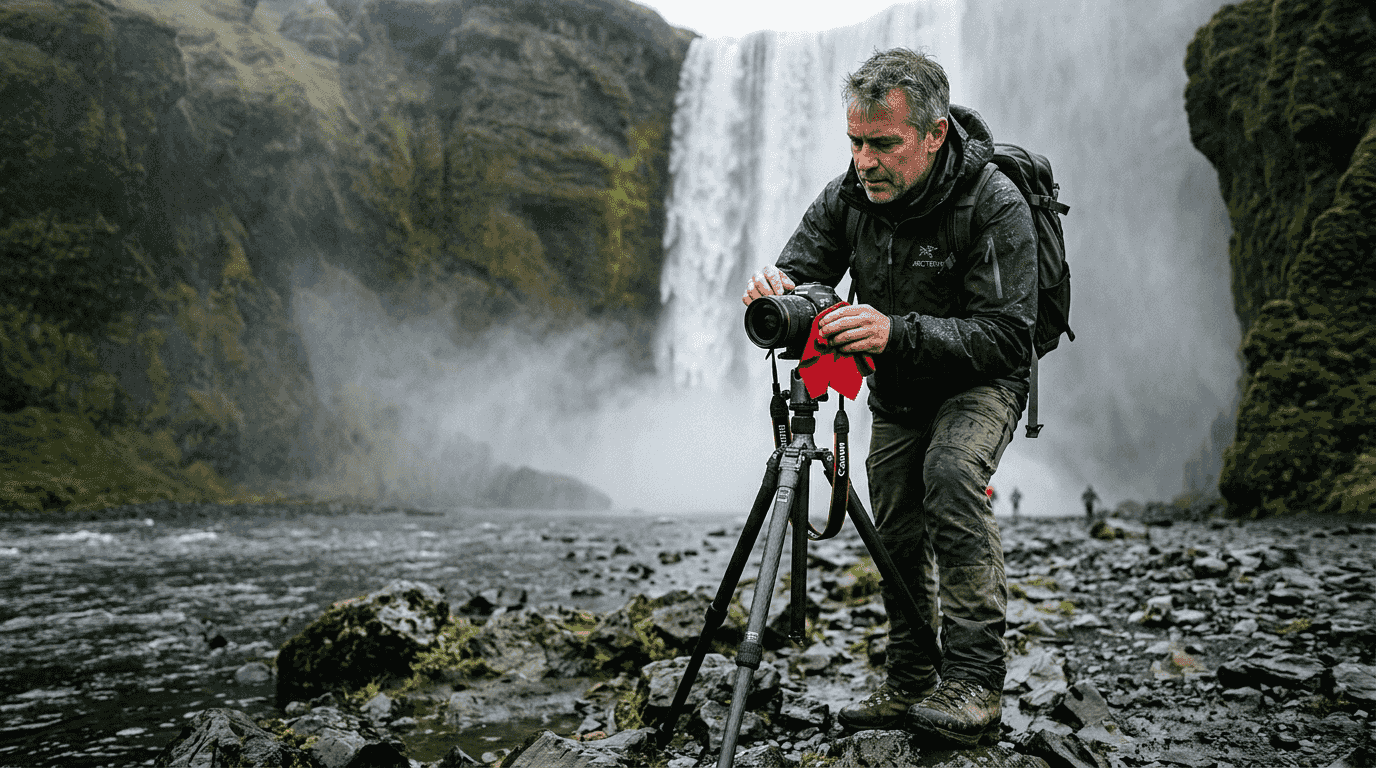
ND filters are essential for long exposure photography in Iceland. A 6-stop or 10-stop ND filter smooths water into silky motion and blurs clouds into ethereal streaks. Graduated ND filters balance exposure when shooting waterfalls against bright skies, preventing the need for heavy HDR processing later.
Adapting to weather changes requires mental flexibility. Rain and fog create moody, atmospheric conditions that add drama to landscapes. Embrace these conditions rather than waiting for perfect blue skies. Some of Iceland’s most compelling images emerge from storms and overcast days that emphasize the landscape’s raw power.
Scouting locations across different seasons reveals varied photographic opportunities:
- Winter ice formations along the coast and frozen waterfalls
- Spring’s explosive waterfall flow from melting snow
- Summer’s lupine flowers blanketing hillsides in purple
- Autumn’s golden grasses contrasting with dark volcanic rock
Pro Tip: Use your smartphone to record GPS coordinates and voice notes at promising locations. Note the sun’s position, wind direction, and composition ideas for return visits or sharing with fellow photographers.
Best photo locations in Iceland 2026 extend far beyond tourist hotspots. While Jökulsárlón and Kirkjufell attract crowds, lesser-known spots like Hvalnes lighthouse and Vestrahorn mountain offer equally stunning compositions with solitude. Research alternative viewpoints using photography forums and location guides.
Lens choice impacts your storytelling ability. Iceland photography lens guide recommendations emphasize wide-angle glass for landscapes, but telephoto lenses isolate details like ice textures and distant peaks. Carry both to maximize creative options at each location.
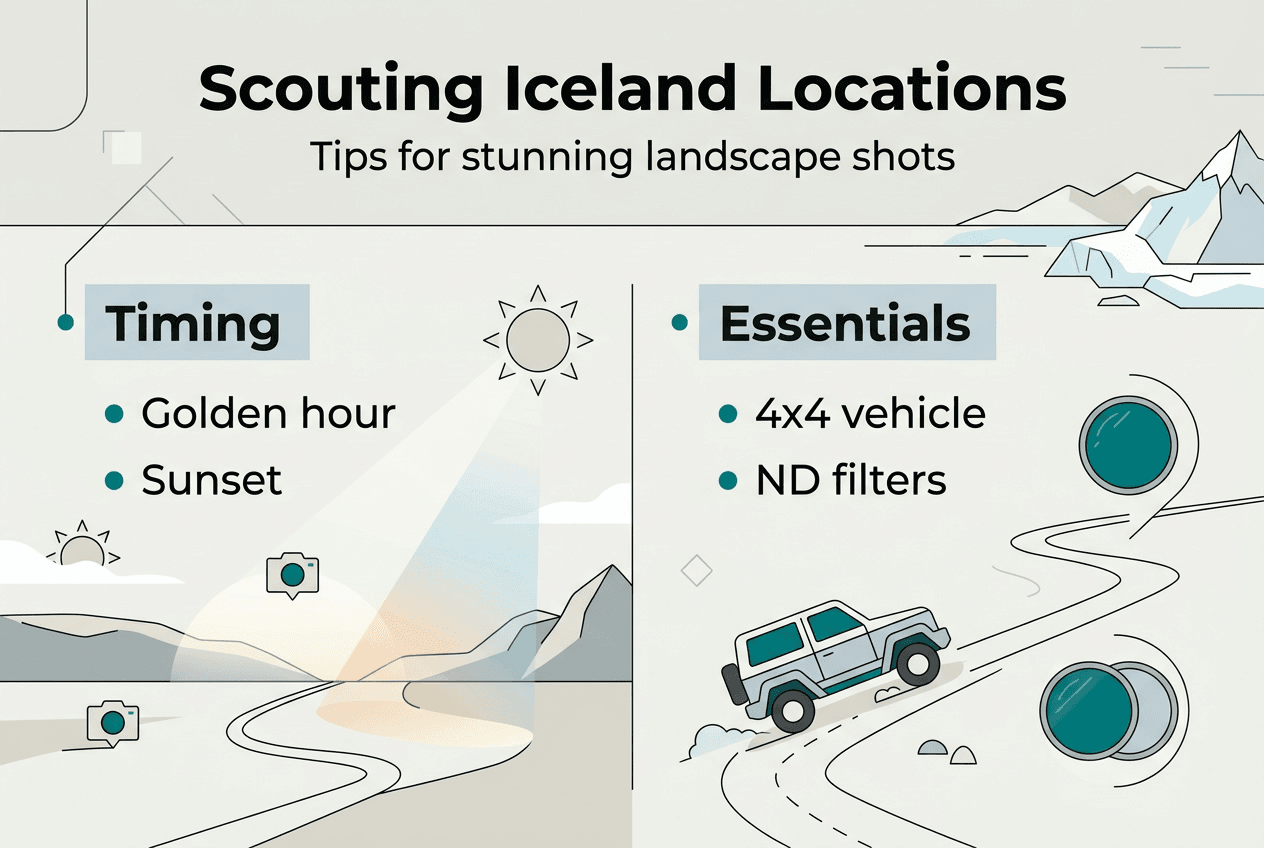
Choosing Iceland photo locations involves balancing accessibility, uniqueness, and light direction. South-facing locations receive better light in winter’s low sun, while north-facing spots shine during summer’s midnight sun. Study sun path apps to predict lighting at specific times and dates.
| Lighting Condition | Best For | Challenges | Solutions |
|---|---|---|---|
| Golden hour | Warm tones, long shadows | Short window, crowded spots | Arrive early, scout alternatives |
| Blue hour | Moody atmosphere, city lights | Low light requires tripod | Use higher ISO, longer exposures |
| Overcast | Even light, saturated colors | Flat, boring skies | Focus on foreground, add drama in post |
| Midday sun | Waterfalls with rainbows | Harsh contrast, blown highlights | Use polarizer, shoot in shade |
Composition techniques specific to Iceland’s landscapes include using volcanic rocks as foreground anchors, leading lines from rivers and roads, and framing mountains through natural arches or ice formations. The country’s minimalist terrain rewards simple, bold compositions over cluttered frames.
Explore professional Iceland photography with Lucy Moments
Capturing Iceland’s dramatic landscapes requires more than gear and planning. It demands an understanding of light, weather, and the patience to wait for perfect moments. Lucy Moments specializes in adventure and landscape photography across Iceland, offering both professional shoots and location insights for travelers.

Whether you are planning your first Iceland photography trip or seeking expert guidance for advanced locations, exploring photography locations in Iceland through an experienced photographer’s lens provides inspiration and practical knowledge. Learn more about Lucy’s approach to storytelling through Iceland’s rugged beauty and how professional photography services can elevate your adventure documentation.
Frequently asked questions
How do I prepare for unpredictable weather during Iceland photo shoots?
Layer your clothing in three stages: moisture-wicking base layers, insulated mid-layers like fleece, and waterproof outer shells. Use weather-sealed camera equipment and protective rain covers for both camera and backpack. Check weather forecasts at least three times daily and carry emergency supplies including extra food, water, and warm clothing in your vehicle.
What equipment is essential for capturing Iceland’s landscape photos?
A full-frame mirrorless camera with weather sealing paired with wide-angle lenses (14-35mm) forms your core kit. Add a sturdy carbon fiber tripod that withstands wind, ND filters for long exposures, polarizing filters for glare reduction, and at least three spare batteries. Include lens cleaning supplies and waterproof camera covers to protect against spray and rain.
When is the best time to photograph iconic locations like Skógafoss waterfall?
Sunrise and sunset provide the most dramatic lighting as angled light illuminates the waterfall and creates potential rainbows. Arrive 45 minutes early to scout compositions and set up your tripod before the light peaks. Explore both the base viewpoint for the classic shot and climb to the top platform for alternative perspectives down the river canyon.
How much buffer time should I include in my Iceland photography itinerary?
Build 2-3 extra days into your schedule to accommodate weather-related road closures and storms, especially during winter months. This flexibility allows you to wait out poor conditions without missing your flight home or losing shooting opportunities. Plan primary and backup locations for each day so weather changes do not derail your entire trip.
Which season offers the best photography opportunities in Iceland?
Your choice depends on desired subjects: winter (November-March) for northern lights and ice caves, summer (June-August) for midnight sun and accessible highlands, or autumn (September-October) for fall colors and fewer crowds. Each season presents unique lighting conditions and landscape features, so align your visit with your photographic goals rather than seeking one “best” time.