Emotion in landscape photography: Iceland explorer's guide
Emotion in landscape photography: Iceland explorer's guide ! Photographer adjusting camera in Iceland landscape Landscape photography is often misunderstood as a purely technical pursuit focused on sharp images and perfect exposures.
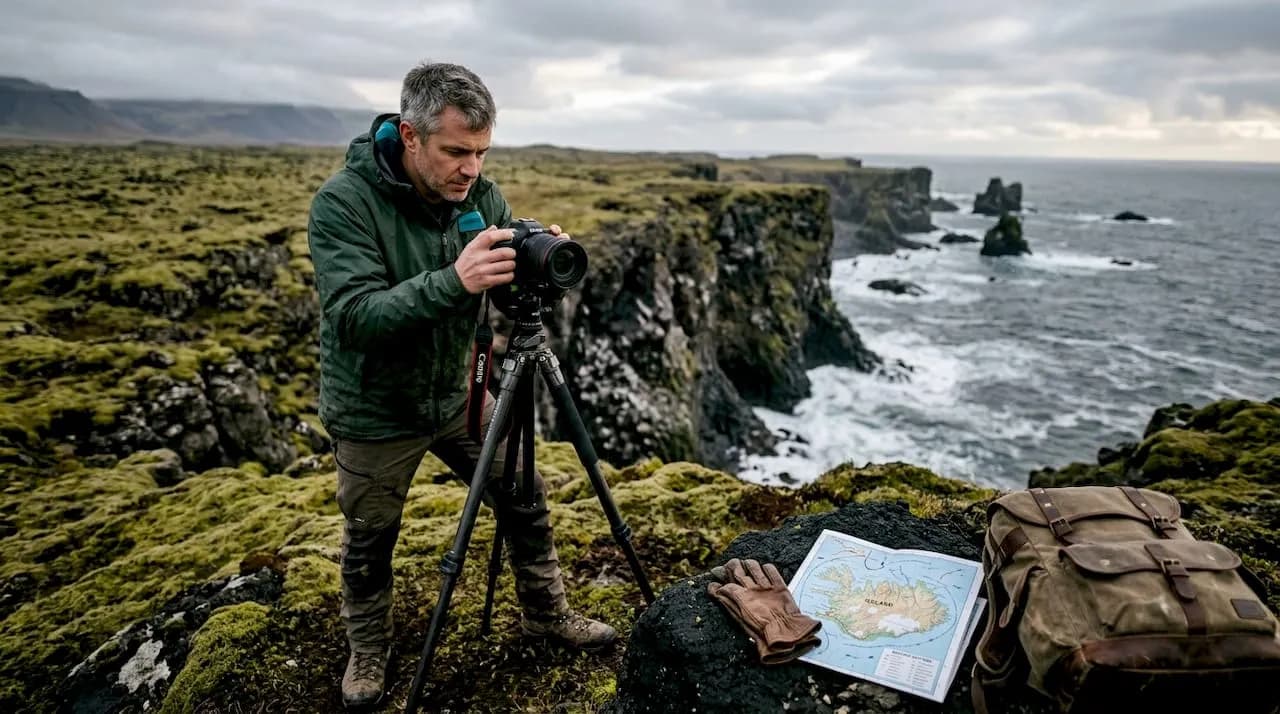
Emotion in landscape photography: Iceland explorer’s guide
Landscape photography is often misunderstood as a purely technical pursuit focused on sharp images and perfect exposures. Yet the most compelling landscape photographs transcend technical precision to evoke deep emotional responses in viewers. Iceland’s dramatic terrain, with its glaciers, volcanic beaches, and ethereal light, offers unparalleled opportunities for photographers seeking to capture emotion alongside beauty. This guide reveals how emotion shapes impactful landscape photography, exploring color theory, compositional techniques, scientific insights into viewer responses, and practical methods tailored specifically for Iceland’s unique environment. You will discover actionable strategies to transform your landscape work from technically proficient to emotionally resonant.
Table of Contents
- Key takeaways
- How emotion shapes landscape photography
- Capturing Iceland’s emotional landscapes: techniques and tips
- Understanding emotional responses: science and visualization
- Advanced perspectives: drone photography and visual storytelling in Iceland
- Explore Iceland’s emotional landscapes with Lucy Moments Photography
- FAQ
Key Takeaways
| Point | Details |
|---|---|
| Emotional bridge | Emotion forms the invisible bridge between photographer, subject, and viewer in landscape work. |
| Color as mood | Color theory shows warm colors energize and cool colors calm viewer responses. |
| Visual mood drivers | High contrast, expansive scale, and minimalist compositions trigger different psychological responses. |
| Iceland as amplifier | Iceland’s dramatic terrain provides abundant mood cues that amplify emotional storytelling. |
| Technique serves emotion | Technical mastery should support emotional intent rather than aim for perfection. |
How emotion shapes landscape photography
Emotion forms the invisible bridge between photographer, subject, and viewer in landscape work. When you photograph a landscape, you are not merely documenting geological features. You are translating your emotional response to a place into visual language that resonates with others who view your images. Color theory in landscape photography reveals how warm colors like reds and oranges create energy and excitement, while cool blues and greens promote calm and serenity. Understanding this emotional vocabulary allows you to deliberately craft images that communicate specific feelings.
Color temperature represents just one dimension of emotional impact. Visual elements including contrast, scale, and minimalism trigger distinct psychological responses in viewers. High contrast images with deep shadows and bright highlights often convey drama and tension. Expansive compositions emphasizing vast scale evoke feelings of awe and insignificance. Minimalist scenes with negative space create contemplative, meditative moods. Iceland’s landscapes naturally provide these elements in abundance, making the country an ideal laboratory for emotional landscape photography.
Mastering emotional impact requires recognizing how different visual choices affect viewer perception. Consider these emotional triggers:
- Warm colors (reds, oranges, yellows) generate excitement, passion, and energy
- Cool colors (blues, greens, purples) inspire tranquility, melancholy, and introspection
- High contrast creates tension, drama, and visual interest
- Expansive scale produces awe, wonder, and humility
- Minimalist compositions foster contemplation and focus
These principles apply universally but gain particular power in Iceland’s environment. The country’s black sand beaches provide dramatic contrast against white foam and ice. Glacial lagoons offer ethereal blue tones that naturally evoke calm. Volcanic landscapes present otherworldly colors that challenge conventional expectations. By understanding these emotional associations, you can select locations and lighting conditions that align with the feelings you want to convey. Mastering mood in photographic storytelling becomes intuitive once you recognize these patterns.
Color choices in landscape photography function as emotional shorthand, instantly communicating mood before viewers consciously process compositional elements or subject matter.
The relationship between technical execution and emotional impact proves more nuanced than many photographers realize. Perfect technical execution without emotional resonance produces sterile images that fail to engage viewers beyond initial appreciation of sharpness or dynamic range. Conversely, emotionally charged compositions with minor technical imperfections often prove more memorable and impactful. Your goal should be achieving technical competence that serves emotional intent rather than technical perfection as an end itself.
Capturing Iceland’s emotional landscapes: techniques and tips
Iceland presents unique challenges that demand adapted techniques for emotional capture. Harsh weather systems arrive suddenly, transforming light and atmosphere within minutes. Extreme latitude produces unusual lighting angles and extended golden hours during summer, while winter offers limited daylight but dramatic twilight. These conditions require flexibility and willingness to embrace unpredictability as creative opportunity rather than obstacle.
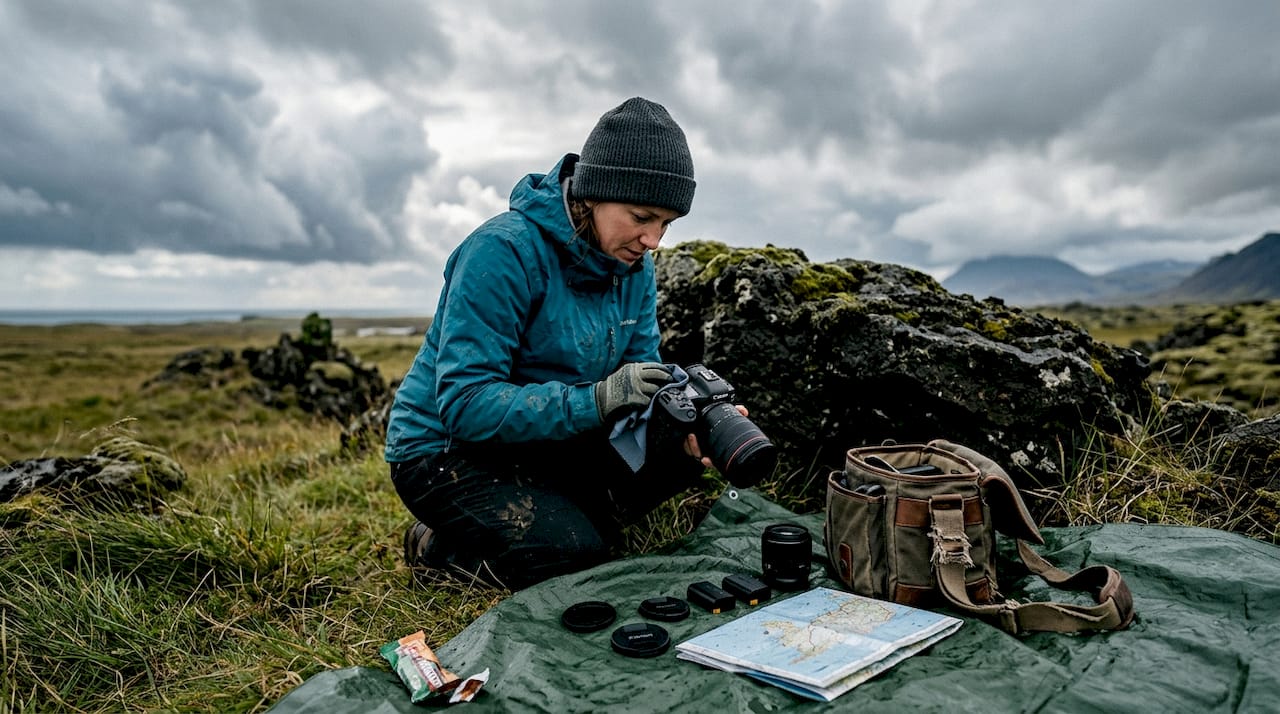
Three tips for capturing Iceland’s landscapes emphasize embracing harsh weather, using low angles for chaotic energy, incorporating human or wildlife elements for scale and story, and employing dramatic minimalism with telephoto lenses to heighten emotional austerity. Each technique addresses specific aspects of Iceland’s environment while serving clear emotional purposes. Low camera angles placed near ground level exaggerate foreground elements and create dynamic leading lines that draw viewers into scenes. This perspective adds energy and movement to static landscapes.
Including human figures or wildlife in vast Icelandic landscapes provides essential scale context while introducing narrative elements. A solitary figure walking across black sand dunes or standing before a massive glacier immediately communicates the overwhelming scale of Iceland’s terrain. These elements transform abstract landscapes into relatable stories about human experience in extreme environments. Wildlife like Arctic foxes or puffins add life and focal points to otherwise empty compositions.
Telephoto lenses offer surprising advantages for emotional landscape work in Iceland. While wide angle lenses dominate traditional landscape photography, longer focal lengths compress distance and isolate specific elements within larger scenes. This compression creates abstract, minimalist compositions that emphasize pattern, texture, and color over recognizable landmarks. The resulting images often feel more emotionally intense due to their focused, simplified visual language.
Consider these Iceland-specific techniques for emotional impact:
- Shoot during storms to capture dramatic clouds and atmospheric mood
- Use low angles near water or ice to emphasize reflections and foreground texture
- Include small human figures to establish overwhelming scale
- Employ telephoto compression to create abstract patterns in glaciers or volcanic terrain
- Seek minimalist compositions with single strong elements against empty backgrounds
Pro Tip: Iceland’s weather unpredictability becomes your creative advantage when you prepare mentally for rapid changes. Keep camera settings flexible and scout locations beforehand so you can respond instantly when dramatic light appears. The most emotionally powerful moments often last only minutes.
Understanding Iceland photography tips with an 80mm lens reveals how mid-range focal lengths balance environmental context with intimate detail. This focal length proves particularly effective for capturing emotional moments during adventure photography sessions, where you want to show both subject and landscape without sacrificing either. The 80mm perspective closely matches human vision, creating natural-feeling compositions that viewers find immediately accessible.
Light quality matters as much as technique in Iceland. Natural light in Icelandic photography varies dramatically by season and weather. Summer’s midnight sun provides extended shooting windows but softer, more diffused light. Winter’s brief daylight hours offer intense, low-angle illumination that creates long shadows and rich colors. Overcast conditions, common year-round, produce even lighting ideal for capturing subtle textures in glaciers and volcanic rock without harsh shadows.
Understanding emotional responses: science and visualization
Scientific research into landscape photography’s emotional impact reveals fascinating insights about how viewers respond to images. Affective computing approaches combine physiological measurements like EEG brain activity and eye-tracking data with machine learning to classify emotional responses to landscape photographs. Classification of emotional valence in landscapes demonstrates that multi-source models using EEG and eye-tracking achieve up to 16.54% higher accuracy in classifying emotional valence compared to single-source methods. This research confirms that landscapes trigger measurable, consistent emotional responses across viewers.
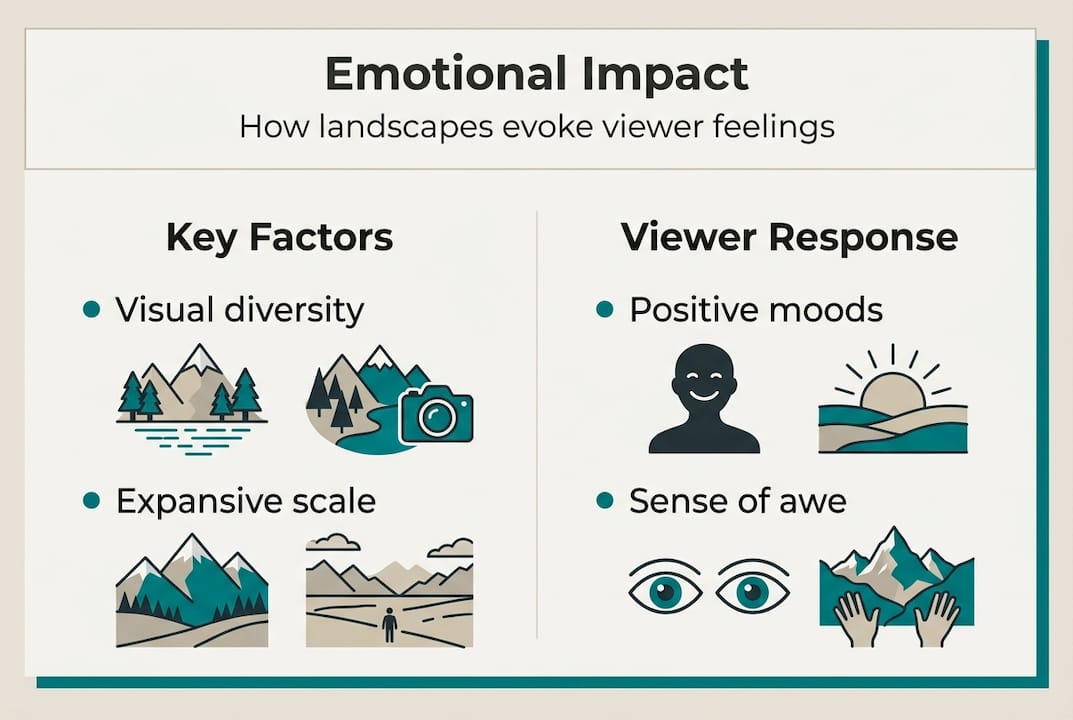
Positive emotional responses correlate strongly with visual diversity and expansive scale in landscape images. Scenes featuring varied elements like water, mountains, vegetation, and sky generate more positive reactions than monotonous landscapes. Similarly, compositions emphasizing vast scale and open space produce feelings of awe and wonder. Iceland’s landscapes naturally excel in both dimensions, offering incredible diversity within compact geographic areas and overwhelming scale in glaciers, waterfalls, and volcanic plains.
| Method | Data Sources | Accuracy Improvement | Key Finding |
|---|---|---|---|
| Single-source | EEG only | Baseline | Detects basic arousal |
| Single-source | Eye-tracking only | +8.2% | Captures attention patterns |
| Multi-source | EEG + Eye-tracking | +16.54% | Classifies valence accurately |
| Combined | All physiological | Highest | Predicts emotional response |
Research into low-level visual statistics predicting emotional valence reveals that innate properties of landscape images directly influence emotional responses independent of cultural context or personal associations. Visual statistics including color distribution, spatial frequency, and contrast patterns trigger automatic emotional reactions before conscious processing occurs. This finding empowers photographers to select and compose scenes with inherent emotional power based on objective visual characteristics rather than subjective guesswork.
Pro Tip: When scouting locations in Iceland, prioritize landscapes offering both diverse visual elements and expansive scale. Scenes combining glacial ice, volcanic rock, water features, and dramatic sky within a single composition naturally generate stronger positive emotional responses in viewers compared to simpler, more uniform landscapes.
These scientific insights validate intuitive practices many experienced landscape photographers already employ. The research provides objective framework for understanding why certain compositions consistently produce emotional impact while others fall flat despite technical proficiency. By recognizing that emotional responses arise partly from measurable visual properties, you can approach composition more systematically while maintaining creative spontaneity.
Understanding why shooting in Iceland proves so rewarding connects directly to these scientific findings. Iceland’s concentration of diverse, dramatic landscapes within accessible areas provides endless opportunities for emotionally powerful compositions. The country’s unique geology creates visual variety unmatched in most locations, while its scale naturally produces the expansive, awe-inspiring perspectives that research identifies as emotionally potent.
Advanced perspectives: drone photography and visual storytelling in Iceland
Drone and aerial photography techniques open new dimensions for emotional landscape work in Iceland. Elevated perspectives reveal patterns, textures, and relationships invisible from ground level. Six essential approaches to crafting drone images emphasizes using patterns, negative space, and low light for poetic solitude while planning shots around specific feelings like vastness. Aerial views transform familiar landscapes into abstract compositions where emotional impact derives from form, color, and pattern rather than recognizable subjects.
Drone photography in Iceland excels at capturing the country’s geological drama from perspectives that emphasize scale and isolation. Glacial rivers create intricate braided patterns across black sand plains. Volcanic craters form perfect circles visible only from above. Coastal cliffs reveal dramatic textures and layering invisible from sea level. These elevated viewpoints allow you to create compositions that feel simultaneously intimate and vast, detailed yet abstract.
Key compositional elements for emotional drone photography include:
- Geometric patterns in rivers, roads, and geological formations
- Negative space emphasizing isolation and scale
- Low light conditions creating long shadows and rich colors
- Minimalist compositions with single strong subjects
- Abstract perspectives that challenge viewer expectations
Comparing traditional ground-based and drone perspectives reveals distinct emotional characteristics:
| Aspect | Ground Photography | Drone Photography |
|---|---|---|
| Perspective | Human eye level | Bird’s eye abstraction |
| Scale communication | Through foreground elements | Through pattern and repetition |
| Emotional tone | Immersive, relatable | Contemplative, otherworldly |
| Subject relationship | Viewer within scene | Viewer observing from above |
| Compositional focus | Depth and layers | Pattern and geometry |
Lighting conditions dramatically affect emotional impact in aerial photography. Dawn and dusk provide low-angle illumination that creates texture through shadows while producing rich, saturated colors. Overcast conditions work surprisingly well for drone work, providing even illumination that reveals subtle variations in terrain without harsh contrast. Stormy weather adds drama through dynamic clouds and atmospheric effects, though safety considerations limit shooting opportunities during severe conditions.
Solitude represents a powerful emotional theme in Icelandic landscape photography. The country’s sparse population and vast uninhabited areas create natural opportunities for compositions emphasizing isolation and contemplation. Aerial perspectives amplify this quality by showing tiny human elements against overwhelming natural scale. A single vehicle on an empty road, a lone hiker crossing a lava field, or an isolated farmhouse surrounded by wilderness all communicate profound solitude that resonates emotionally with viewers.
Visual storytelling through landscape photography extends beyond single images to sequences that build narrative. In Iceland, you might document a journey from coast to interior, showing progression from familiar seaside landscapes through increasingly alien volcanic terrain to glacial highlands. Each image contributes to cumulative emotional arc, with composition, color, and subject matter evolving to support the narrative. This approach proves particularly effective for adventure and experiential photography where the journey itself forms the story.
Exploring best Iceland photography ideas for 2026 provides contemporary inspiration for combining traditional and aerial perspectives. Modern landscape photography increasingly blends multiple viewpoints and techniques within cohesive projects, using ground-level intimacy and aerial abstraction to create richer, more emotionally complex visual narratives.
Explore Iceland’s emotional landscapes with Lucy Moments Photography
Transforming your understanding of emotional landscape photography into powerful images requires both knowledge and experience. Lucy Moments Photography specializes in capturing Iceland’s dramatic landscapes through emotionally resonant imagery that connects deeply with viewers. Whether you are planning your first Iceland photography adventure or seeking to refine your existing skills, professional guidance helps you recognize and capture those fleeting moments when light, weather, and landscape align perfectly.

Discover how personalized Iceland photography adventures can deepen your connection with the country’s extraordinary landscapes while developing your ability to translate emotion into compelling images. From intimate workshops focused on specific techniques to comprehensive adventure photography sessions documenting your Icelandic journey, professional support ensures you return home with images that capture not just what you saw, but how those landscapes made you feel. Visit Lucy Moments Photography to explore available services and begin planning your emotionally immersive Iceland photography experience.
FAQ
What role does color play in evoking emotions in landscape photos?
Color temperature directly influences viewer emotional response through psychological associations developed over human evolution and cultural experience. Warm colors including reds, oranges, and yellows trigger feelings of energy, excitement, and passion, making them ideal for sunrise, sunset, and volcanic landscape photography. Cool colors like blues, greens, and purples promote calm, tranquility, and sometimes melancholy, working beautifully for glacial scenes, overcast conditions, and twilight photography. Strategic color choices allow photographers to guide viewer emotional interpretation before conscious thought occurs.
How can weather conditions in Iceland enhance emotional landscape photography?
Iceland’s unpredictable weather creates dramatic atmospheric conditions that amplify emotional impact through dynamic skies, shifting light, and textural elements like rain, snow, and fog. Storms produce moody, energetic compositions with dramatic clouds and intense contrast, while fog and mist create mysterious, contemplative atmospheres that soften harsh landscapes. Rather than waiting for perfect conditions, embrace weather variability as creative opportunity. The most emotionally powerful Iceland photographs often capture transitional moments when weather systems collide, creating unique lighting and atmospheric effects impossible to predict or replicate.
What composition techniques help convey scale and emotion in Iceland’s landscapes?
Low camera angles placed near ground level exaggerate foreground elements and create dynamic leading lines that add energy and movement to static scenes. Including human figures or wildlife provides essential scale context, transforming abstract landscapes into relatable stories about experience in extreme environments. Telephoto lenses compress distance and isolate specific elements, creating minimalist compositions that heighten emotional intensity through simplified visual language. Each technique serves distinct emotional purposes, from the dynamic energy of low angles to the contemplative austerity of telephoto minimalism.
How do drone shots influence the emotional impact of Icelandic landscape photos?
Aerial perspectives reveal patterns, textures, and geometric relationships invisible from ground level, creating abstract compositions where emotional impact derives from form and color rather than recognizable subjects. Drone views emphasize scale through pattern repetition and negative space, producing feelings of vastness and isolation that resonate deeply with viewers. Low light conditions during dawn and dusk create long shadows and rich colors that enhance mood, while elevated viewpoints allow minimalist compositions with single strong subjects against empty backgrounds. The resulting images feel simultaneously intimate and vast, detailed yet abstract, offering contemplative emotional qualities distinct from ground-based photography.